"The €15 hotel room is a myth. The 'cheapest city in Europe' label is outdated. Prague in 2026 is not the budget destination your older friends remember — but it's still 35–45% cheaper than every Western European capital, and the food is still some of the best value on the continent."
Every year, someone writes an article claiming "Prague is no longer cheap." Every year, they're partially right and mostly wrong. Prague has changed — significantly — since the early 2010s. Hotel prices have doubled in some categories. Restaurant prices in the tourist center have risen 60–80%. A sit-down dinner that cost €6 in 2012 now costs €15–20.
But here's what those articles don't tell you: Prague's price increases have brought it in line with Berlin or Barcelona, not London or Paris. It's still dramatically cheaper than any Western European capital for comparable quality. The question isn't "Is Prague cheap?" — it's "Cheap compared to what?" This guide gives you the actual 2026 numbers so you can answer that question for yourself.
Quick Answer
For people who need the verdict before the evidence
Yes, Prague is still cheap in 2026 — but the definition of "cheap" has shifted. Prague is no longer "Eastern European cheap." It's now "cheaper than Berlin and Barcelona by 25–35%." That's still a significant advantage, but it requires adjusting expectations if your reference point is 2015 articles calling Prague "the cheapest city in Europe."
What Actually Changed
The three shifts that redefined Prague's pricing
Prague's price transformation wasn't random — it was driven by three identifiable factors:
1. Czech Republic joined the Schengen Zone and EU fully in 2004–2007. This opened Prague to low-cost carriers (Ryanair, Wizz Air, EasyJet) and erased the friction of visiting. Tourist arrivals doubled between 2010 and 2019 (from 4M to 8M annually). More tourists = more demand = higher prices, especially in accommodation.
2. Airbnb and short-term rentals transformed the housing market. In central Prague (Prague 1), an estimated 15–20% of apartments are now short-term rentals. This reduced long-term rental supply, pushed up prices for locals, and created a two-tier accommodation market: Old Town apartments at €80–150/night, and everything else much cheaper.
3. Czech wage growth outpaced most of Europe (2015–2023). The Czech Republic had one of the fastest-growing economies in the EU for nearly a decade. Average wages nearly doubled between 2013 and 2023 (from ~€800/month to ~€1,500/month). This meant local businesses could — and did — raise prices to levels that locals could afford, not just tourists.
"Prague's price increases weren't gouging — they were normalization. The city simply caught up to where it should have been priced all along, given the quality of its architecture, food, and café culture."
Real 2026 Prices: Every Category
What things actually cost, separated into tourist-center vs. local prices
The tourist-center premium: Prague 1 (Old Town, Lesser Town, Castle District) commands a 30–50% premium over Prague 2–10 for accommodation and restaurants. A €12 dinner in Žižkov (Prague 3) costs €18–22 in Old Town Square for similar quality. Walk 15 minutes from the main squares and prices drop noticeably.
Food & Dining
Prague's most underrated cheap thing — and it's better than ever
While accommodation gets the attention, Prague's food scene is where the value advantage is most pronounced in 2026. Czech cuisine has undergone a quiet revolution over the last decade — a new generation of chefs has elevated traditional dishes while keeping prices far below Western European levels.
- Traditional Czech restaurant (svíčková, goulash, dumplings) in a local neighborhood: €10–15 for a main course. A full meal with soup and dessert: €14–20. This is 40–50% cheaper than a comparable meal in Vienna or Munich.
- Same meal in a tourist-square restaurant: €16–25. The premium is real — avoid ordering on Old Town Square or Wenceslas Square if you care about price-to-quality ratio.
- Street food options: Trdelník (chimney cake, €2–3.50), chlebíčky (open-faced sandwiches, €2–4 each), and the growing number of international street food stalls in Naplavka and Anděl. A full lunch from street vendors: €5–8.
- Café culture: Prague's café scene is one of the best in Central Europe. A cappuccino costs €2–3 in a neighborhood café vs €4–5 in Western Europe. Cake or pastry with coffee: €4–7 total. The cafés in Vinohrady and Letná are outstanding and far cheaper than their Vienna equivalents.
- Supermarket prices: A simple pasta dinner for two (pasta, sauce, bread, basics) costs €4–6 from Albert or Billa. Breakfast supplies for two days: €5–8. Self-catering one meal per day saves €12–18/day compared to eating out.
- Lunch specials (denní menu): Most Czech restaurants offer a fixed lunch menu (soup + main + sometimes dessert) for €6–9 on weekdays. This is one of the best value meals in Europe — the quality is often identical to the à la carte menu at half the price.
"The €6 dinner your friend had in 2012 was a real thing — but it was already disappearing by 2015, and it's been gone for a decade. A €12 dinner in 2026 is still cheaper than a €25 dinner in London. The absolute price changed; the relative advantage didn't."
Prague vs Western Europe
Where Prague still wins — and where the gap has closed
Restaurant meals: 40–50% cheaper than London/Paris.
Accommodation: 35–50% cheaper for comparable quality.
Public transport: €1.20 for 30 minutes vs €2.50–4 in Western Europe.
Supermarket food: 30–40% cheaper overall.
Coffee: €2–3 vs €3.50–5.
Hotel prices: Old Town hotels at €100–150 now match Barcelona/Berlin.
Museum entries: Similar pricing now (€5–10 in both).
Café quality: Prague cafés now rival Vienna — price gap closing as quality equalizes.
Airport transfers: €20–25 is not particularly cheap.
Old Town hotels: €100–150/night matches Barcelona/Berlin.
Tourist-area restaurants: €20–25/person is approaching Western levels.
Souvenirs: Same prices as anywhere.
Premium experiences: Fine dining and opera tickets are priced at European levels.
The net assessment: Prague is still 35–45% cheaper than London, Paris, or Amsterdam for a comparable trip. That's €400–700 savings on a 5-night trip for a couple. The savings are smaller than they were in 2015 (when the gap was 50–60%), but they're still real and significant.
Prague vs Budapest vs Krakow
The comparison everyone actually wants
Prague is now the most expensive of the three — but by a smaller margin than most people assume. In 2015, Prague was 25–30% more expensive than Budapest. In 2026, the gap is closer to 10–15%. Budapest has caught up significantly (especially on accommodation), while Krakow remains the cheapest of the three but is also rising fast.
The quality comparison matters more than the price gap. Prague's architecture, café culture, and walkability are arguably superior to both Budapest and Krakow. Is Prague worth 10–15% more than Budapest? For most visitors, yes — the Old Town experience alone justifies the premium.
Real Daily Budgets for Prague
Three tiers, with specific assumptions
- Budget (€30–45): Hostel dorm bed (€12–18), lunch from a street vendor or lunch special (€4–6), dinner at a cheap local pub or cooked at hostel (€6–10), coffee (€2), public transport (€1.20), one paid attraction (€5–8). You'll eat well but simply and stick to local neighborhoods rather than tourist areas.
- Mid-range (€60–85): Private room in Airbnb or budget hotel (€35–55), lunch from a café or lunch special (€6–9), dinner at a proper restaurant (€12–18), coffee or pastry (€3–5), public transport or walking, 2–3 attractions (€10–20). This is the sweet spot for most visitors — you're not depriving yourself but you're not being careless either.
- Comfortable (€85–120): 3-star hotel in a good location (€60–90), lunch at a nice restaurant (€12–18), dinner at a higher-end restaurant (€18–28), taxis occasionally instead of public transport, multiple attractions. You're not staying at the Four Seasons, but you're not thinking about money.
Where You Can Still Save Significantly
The strategies that actually work in 2026
- Stay in Prague 2 (Vinohrady), Prague 3 (Žižkov), or Prague 5 (Smíchov): 15–20 minute walk or 5-minute tram ride to Old Town. Hotels and apartments are 30–40% cheaper than Prague 1, and the neighborhoods are more interesting anyway. Vinohrady has excellent restaurants; Žižkov has the best local atmosphere; Smíchov has the riverside walks.
- Eat outside the tourist squares: Walk 5–10 minutes from Old Town Square or Wenceslas Square and restaurant prices drop 25–35%. The quality is often better — tourist-area restaurants have less incentive to be excellent.
- Use lunch specials (denní menu): Available at most Czech restaurants weekdays 11am–2pm. Soup + main course for €6–9. This is the single best value meal in Prague — the quality matches the evening menu.
- Cook some meals: Prague supermarkets (Albert, Billa, Lidl) are cheap. A simple pasta dinner for two costs €4–6 to make at home vs €15–20 in a restaurant. If you're staying in an Airbnb with a kitchen, cooking breakfast and one other meal saves €12–18/day.
- Use public transport, not taxis: Prague's tram and metro system is excellent. A 30-minute ticket is €1.20; a 24-hour pass is €4.80. Taxis start at €5–6 and can reach €15–25 for short distances if you're not careful. Use the Uber app or Liftago (local alternative) if you need a car.
- Visit museums on free days: Many Prague museums have one free day per month (usually the first Monday). The National Museum is free on the first Monday of every month. The Prague City Gallery is free on the first Wednesday.
- Buy coffee from local cafés, not hotel restaurants: A hotel breakfast buffet costs €12–20. A coffee and pastry at a neighborhood café costs €4–7. The café experience is also more authentic and enjoyable.
The one thing that doesn't work anymore: Trying to find "hidden cheap restaurants" in Prague 1. They existed in 2010; they mostly don't in 2026. The Old Town is thoroughly optimized for tourism, and even the "local" places have tourist-area pricing. If you want local prices, go to local neighborhoods.
Where to Stay in Prague: Neighborhood Guide
Location is everything in Prague
Old Town (Staré Město): The tourist epicenter — Astronomical Clock, Old Town Square, Charles Bridge access. Beautiful, convenient, and expensive. Hotels: €75-140/night (May 2026 data). Hostels: €20-35/bed. The convenience is real; the crowds are intense. Best for first-timers staying 1-2 nights.
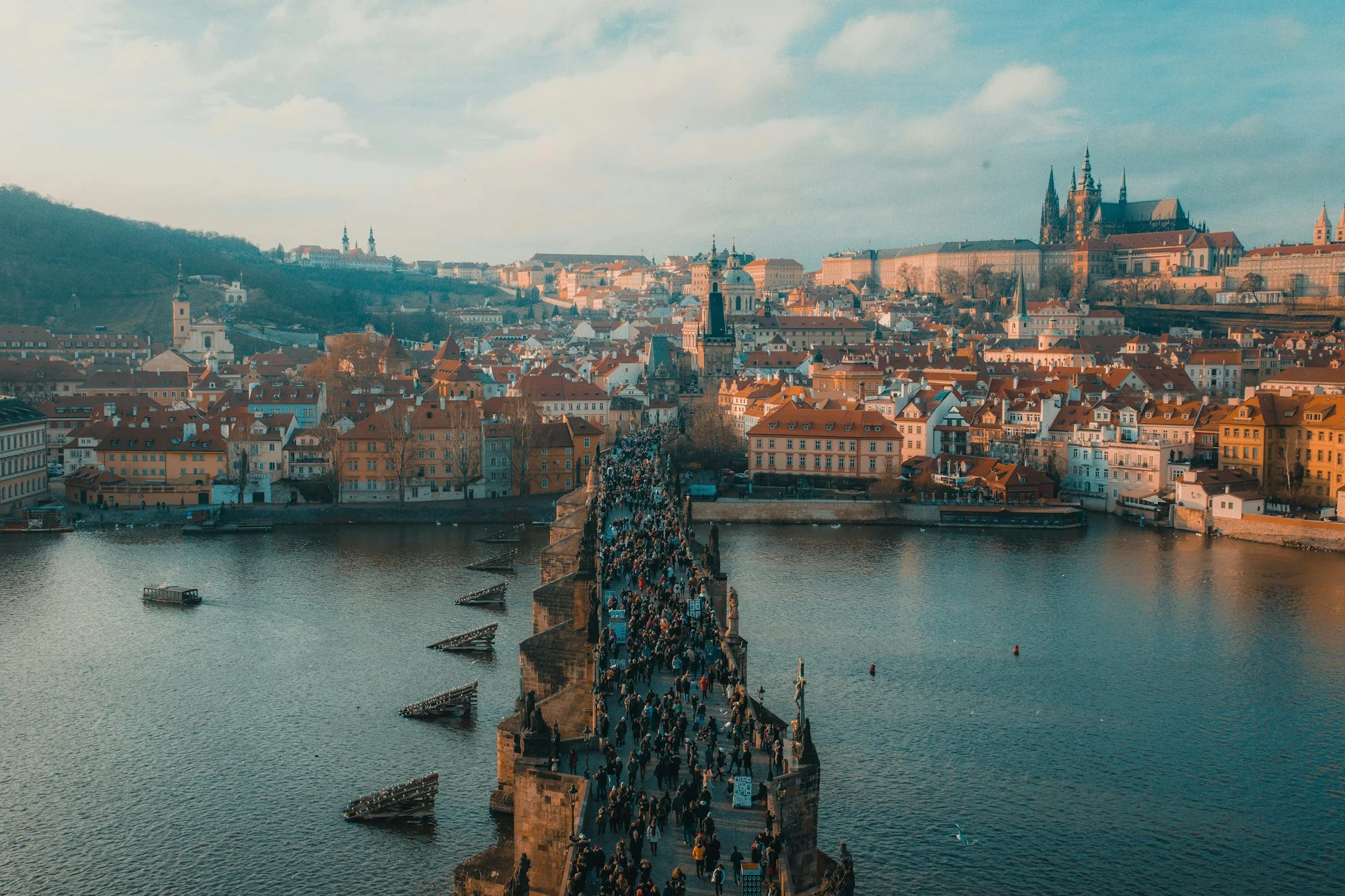
Lesser Town (Malá Strana): Below the Castle, across the river from Old Town. Quieter, prettier, more residential. The streets wind uphill toward the Castle through baroque architecture. Hotels: €70-120/night. Best for romantic getaways and those who don't mind walking.
Vinohrady: The expat neighborhood — tree-lined streets, art nouveau buildings, excellent restaurants and cafes. Metro access to center in 10 minutes. Half the price of Old Town with triple the local character. Hotels: €50-90/night. Best for longer stays and food lovers.
Žižkov: The working-class neighborhood turned hipster haven. Cheap beer, punk bars, street art, zero tourists. Metro to center in 15 minutes. Hostels: €12-18/bed. Best for budget travelers who want local chaos over tourist order.
Holešovice: The up-and-coming industrial area — art galleries, clubs, the famous DOX center. Still rough around the edges but improving fast. Good value now, may not last. Hotels: €45-80/night.
Prague Castle: Skip the Interiors
The outside is free and better
The Castle complex: The largest ancient castle in the world, perched on a hill overlooking the city. The exterior — the gates, the courtyards, the views over Prague's red roofs — is entirely free. This is what you came for.
The interiors: The Cathedral (free entry, tower climb €8), the Old Royal Palace (€10), Golden Lane (€10). These are fine but not exceptional. You have seen better cathedrals and palaces elsewhere. Skip the paid tickets unless you are a serious history buff.
The best Castle experience: Walk up through the Lesser Town (Malostranská metro), enter through the main gate, wander the free courtyards, visit the free cathedral entry, take photos of the view, leave via the gardens. Total cost: €0. Total time: 2 hours. Better than paying €30 for interiors.
Czech Food & Beer: The Real Reason to Visit
Best beer in Europe, hearty food, low prices
Czech beer: The original pilsner was invented here (Pilsner Urquell, 1842). Czechs drink more beer per capita than any nation on earth. The quality is extraordinary — local breweries in every town, fresh unpasteurized beer in Prague's pubs. Price: €1.20-1.80 for 0.5L in local pubs. Tourist restaurants charge €3-4 — avoid them.
Where to drink: U Fleků (historic, touristy but atmospheric), Lokál (chain of beer halls with fresh tank beer), any "hospoda" (pub) with a Pilsner Urquell sign outside. Žižkov has the highest density of pubs in Europe — 300+ in one neighborhood.
Czech classics: Svíčková (beef in cream sauce with dumplings), goulash (heavier than Hungarian, with dumplings), smažený sýr (fried cheese — a national treasure), trdelník (sweet chimney cake — tourist food but delicious). Main dishes €6-10 in local restaurants, €12-18 in tourist areas.
Lokál Dlouhááá: The best introduction to Czech food and beer. Fresh tank Pilsner, traditional dishes done well, local crowd, reasonable prices. Several locations; the Dlouhá street branch is most convenient.
Day Trips from Prague
When you need a break from the city
Kutná Hora (1 hour by train): A medieval silver mining town with two UNESCO sites. The Sedlec Ossuary (Bone Church) — a chapel decorated with 40,000 human skeletons. St. Barbara's Cathedral — one of Europe's most beautiful Gothic churches. Combined ticket €8. Train from Prague: €6 return.
Terezín (1 hour by bus): A former military fortress turned Nazi concentration camp. Less famous than Auschwitz but deeply moving. The ghetto museum and the Small Fortress prison tell the story of the 150,000 Jews who passed through. Entry €10. Essential for understanding Czech WWII history.
Karlštejn Castle (40 minutes by train): A fairy-tale fortress built by Charles IV to house the crown jewels. The village is touristy but the castle approach through the woods is beautiful. Basic entry €8; guided tours of the Chapel of the Holy Cross (the highlight) €12. Combined with a hike in the surrounding forests.
Český Krumlov (3 hours by bus): The most beautiful town in the Czech Republic — a medieval gem in a river bend, dominated by a massive castle. Too far for a comfortable day trip (6 hours round-trip), but perfect for an overnight. If you have 2 days to spare, go.
Practical Tips for Prague
Avoiding scams, saving money
Money exchange: Never exchange money at airport or train station kiosks — rates are criminal. Use ATMs (withdraw Czech koruna) or exchange offices with 0% commission signs. Avoid "Change" offices on tourist streets — they give you "tickets" instead of cash that are worthless.
Public transport: Buy tickets at metro stations or via the PID Lítačka app. 30-minute ticket: €1.10. 90-minute: €1.50. 24-hour: €4.50. Validate your ticket immediately upon entering the metro or bus (stamp machines at entrances). Ticket inspectors fine €20 for no valid ticket — no exceptions.
Taxi scams: Never take taxis from the street in tourist areas. Use Uber, Bolt, or liftago.cz. Airport to center should cost €15-20 fixed rate; street taxis charge €50+.
Restaurant traps: Restaurants on Old Town Square and near Charles Bridge charge 2-3x normal prices. Walk 5 minutes in any direction for local prices. Menus should always display prices — if they don't, leave.
Prague Costs FAQ
The questions people actually ask, answered with real numbers
Yes — but with caveats. Prague is still 35–45% cheaper than London, Paris, or Amsterdam across comparable categories. A sit-down dinner: €12–20/person vs €25–45 in Western Europe. A mid-range hotel: €60–100/night vs €120–200. A coffee: €2–3.50 vs €3.50–5. What's changed: Prague is no longer 'Eastern European cheap' — it's now priced more like Berlin or Barcelona. The old articles calling Prague 'the cheapest city in Europe' are 10+ years out of date.
Slightly — roughly 10–15% more expensive across comparable categories in 2026. Prague hotel rooms: €60–100 vs €50–85 in Budapest. Restaurant meals: €12–20 in Prague vs €10–17 in Budapest. Coffee: similar (€2–3.50 in both). Public transport: Prague is actually cheaper (€1.20 for a 30-minute ticket vs €1.50 in Budapest). The gap has narrowed significantly since 2019 — Prague used to be 25–30% more expensive than Budapest, now it's closer to 10–15%.
Budget traveler (hostel, street food, minimal extras): €30–45/day. Mid-range traveler (private room, mix of cooking and restaurants, 2–3 paid attractions): €60–85/day. Comfortable traveler (hotel, restaurants for most meals, paid attractions): €85–120/day. These estimates assume you're staying outside the most expensive Old Town hotels and eating at least partially away from the main tourist squares.
Budget: €90–135 total (€30–45/day). Mid-range: €180–255 total (€60–85/day). Comfortable: €255–360 total (€85–120/day). These include accommodation, food, transport, and 1–2 paid attractions per day. Add €30–50 if you're planning to do a lot of paid attractions (Prague Castle circuits, museums, concerts).
Yes — Prague is one of the safest capital cities in Europe. Violent crime is rare. Petty crime (pickpocketing) exists in tourist areas but is less common than in Paris, Rome, or Barcelona. The main annoyance is tourist-area restaurants with aggressive touts — simply walk past them. Use common sense in crowded areas and you'll have no issues.