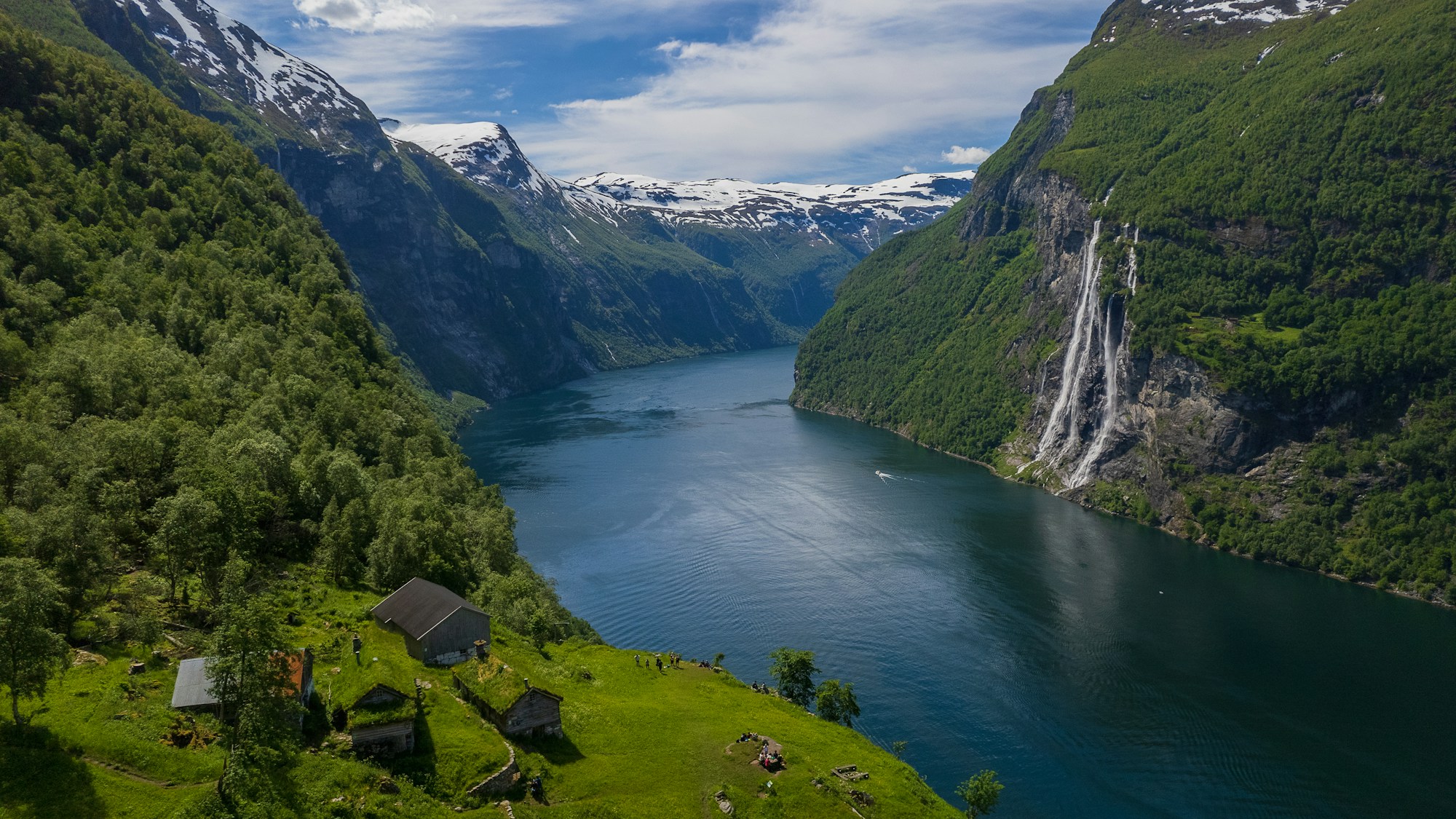
"The fjords themselves cost nothing. A glacier-carved valley filled with seawater, reflecting 1,500m mountains, doesn't charge admission. What costs money is the infrastructure around it — and that's where most people overpay by 300–400%."
Norway's fjords are the single most dramatic natural feature in Europe. Nothing in the Alps, the Mediterranean, or the British Isles comes close to the sheer scale of a Geirangerfjord or a Sognefjord — cliffs rising vertically from dark water, waterfalls dropping hundreds of metres, snow on peaks in June. And the most important thing to understand about seeing them: the scenery is free. The expense is optional.
A Hurtigruten or fjord cruise cabin costs €200–400/night per person. A hytte (Norwegian cabin) on the same fjord costs €40–70/night. A restaurant dinner in Geiranger costs €35–50; cooking in your hytte costs €8–12. The cruise industry has convinced people that fjords = expensive. Self-guided fjord travel is one of Europe's great budget travel secrets — if you know how to do it.
Quick Answer
Yes, you can — but "budget" in Norway means €80–120/day, not €30
Norway is the most expensive country in Europe. Accept this before planning anything. A self-guided fjord trip costs €80–120/day per person (excluding flights) — compared to €30–50 in Portugal or €50–80 in Croatia. But compared to the €250–400/day that cruise packages effectively cost, self-guided fjord travel saves 60–70%. The fjords are affordable. The packages are not.
The Budget Reality
Why Norway feels expensive — and where the money actually goes
Three things make Norway expensive, and only one of them is unavoidable:
1. Wages are high (unavoidable). Norway's average wage is among the highest in the world (~€5,500/month). Everything costs more because the people providing services need to earn a living at Norwegian levels. This applies to food, transport, and accommodation equally — there's no "local price" loophole.
2. The cruise industry has normalized rip-off pricing (avoidable). Geiranger, Flåm, and other fjord villages exist in a tourist bubble where prices are set for cruise passengers who have no alternative. A sandwich that costs €4 in Bergen costs €12 in Geiranger — same sandwich, 30km apart. The solution is simple: don't eat in fjord villages. Bring your own food.
3. Accommodation is priced for short-stay tourists (partially avoidable). Hotels in fjord areas charge €150–300/night because they cater to 1–2 night cruise passengers. Hytter (cabins) and campsites charge €40–70/night because they cater to Norwegians on holiday. Stay in hytter, not hotels.
"The moment you stop doing what the cruise passengers do — eating at fjord restaurants, sleeping in fjord hotels, booking fjord tours — Norway becomes dramatically cheaper. The fjords don't care how much money you have. Only the infrastructure around them does."
Best Budget Fjord Routes
Three fjords, three very different budget profiles
Why: 1.5 hours from Bergen by bus. Excellent public transport. Cheap hytter. Free hiking trails.
Highlights: Vøringsfossen waterfall, Steinsdalsfossen, fruit orchards.
Daily cost: €70–100.
Why: Norway's longest fjord. Frequent ferries (cheaper than buses). Multiple budget accommodation options.
Highlights: Fjord ferry crossings, Nærøyfjord (UNESCO), Jostedalsbreen glacier.
Daily cost: €80–110.
Why: The most dramatic fjord. Expensive to reach, but worth it for one night.
Highlights: Seven Sisters waterfall, Ørnesvingen viewpoint, fjord ferry.
Daily cost: €100–130.
The recommended combination: Fly into Bergen. Day 1–2: Hardangerfjord (cheapest, closest). Day 3–4: Sognefjord via public ferry (the ferry ride itself is the experience). Day 5: Geirangerfjord as a splurge (one night in a hytte, one ferry ride, then back to Bergen). This maximizes scenery while keeping the average daily cost under €100.
Transport Hacks
Where people waste the most money — and how not to
- Public ferries (Fjord1, Norled): The single best value transport in Norway. A Bergen–Mostraum–Flåm ferry combination covers 4 hours of world-class fjord scenery for €35–50. This is the same view that cruise passengers pay €200+ per day to see. Book on the day or via the ferry company apps — no advance booking needed outside peak July.
- Express boat (Bergen–Flåm fast route): €55–70. Faster (2.5 hours) but less scenic. Only worth it if you're genuinely short on time.
- Bus (Vy Buss): Bergen to Hardangerfjord: €12–18 one way. Bergen to Sognefjord: €18–25. Clean, comfortable, wifi-equipped. Buy on the Vy app or at the bus station.
- Norway in a Nutshell ticket: €95–130 round trip from Bergen, covering train to Voss, bus to Gudvangen, fjord cruise to Flåm, and Flåm Railway return. This is genuinely good value for what it includes — but book directly with Vy, not through resellers who charge 30–50% markups.
- Car rental: €50–80/day minimum, plus fuel (€1.80–2.20/litre) and tolls. Only worth it for remote fjords (Lofoten, northern Norway) or if you're a group of 3+. For the main southern fjords, public transport is cheaper and less stressful.
- Flights to Bergen: Bergen (BGO) is the fjord gateway. Norwegian, SAS, and Wizz Air serve it from most European cities. Book 6–8 weeks ahead. Flying into Oslo and taking the train to Bergen (7 hours, €40–60) saves money but wastes a day.
The reseller trap: Do NOT book "Norway in a Nutshell" through Viator, GetYourGuide, or hotel concierges. They charge €150–200 for the exact same ticket that costs €95 directly from Vy. The cruise companies' own websites and apps always have the cheapest prices. This single mistake costs people €50–100.
Where to Stay
The single biggest cost decision you'll make
There are four tiers of accommodation in fjord Norway, and the gap between them is enormous:
- Book via Husfløiten or DNT (Norwegian Trekking Association): DNT cabins are the best deal in Norway — €20–40/night for members (membership costs €30/year, pays for itself on the first stay). Basic but clean, with kitchens and bedding. Book at ut.no.
- Use Hytt.no or Booking.com: Private hytter range from €40–100/night. Filter for "kitchen" and "self-catering" — this is essential for saving on food. Look for hytter 5–10km outside the main tourist villages for 30–40% lower prices.
- Camping: Norwegian campsites are exceptionally well-equipped — most have kitchens, showers, and washing machines. A tent pitch costs €12–20; a small cabin (camping hytte) costs €35–55. Try norcamp.no for listings.
- Bergen base: Stay in Bergen for the first and last night (hostel: €30–50). Use Bergen as your transport hub and only pay fjord-area prices for the nights you're actually in the fjords.
Food on a Budget
This is where you save €30–50/day — if you're willing to cook
The single most important budget rule for Norway: self-cater as much as possible. Norwegian supermarkets (Rema 1000, Kiwi, Extra, Coop) are excellent and cheap compared to restaurants. A proper dinner for two that costs €60–80 in a fjord restaurant costs €12–18 to cook in your hytte.
- BREAKFAST: Buy bread, cheese (Norwegian brown cheese / brunost is €4–6 and lasts days), ham, and jam. Total: €2–3/person. Hytters almost always have a coffee maker and basic supplies.
- LUNCH (pack for hiking): Wraps (lefse with ham and cheese, €2–3 each), apples, nuts, chocolate. Supermarkets sell pre-made wraps and sandwiches for €3–5. Total: €4–6/person.
- DINNER (cook in hytte): Pasta with sauce (€3–4 for two), frozen fish cakes/fish balls (fiskekaker, €4–6 for a pack of 6), pre-made salads (€3–5), pizza from the freezer section (€3–4). Total: €6–9/person for a filling meal.
- ONE RESTAURANT MEAL: Allow yourself one proper Norwegian meal — fish soup, reindeer stew, or fresh salmon — at a café in Bergen or a local restaurant in a larger town. Budget €18–28/person. Make it count.
- Supermarket timing: Rema 1000 and Kiwi have "happy hour" markdowns in the evening (yellow stickers = 50% off). Shop after 6pm for meat, bread, and prepared foods at half price. This is a genuine Norwegian budget hack that locals use religiously.
The fjord restaurant trap: Restaurants in Geiranger, Flåm, and other cruise ports charge 200–300% above Norwegian supermarket prices. A bowl of soup costs €12–15; the same soup ingredients cost €3 at a supermarket. Never plan to eat more than one meal in a fjord village. Bring everything else with you.
Real Costs: 5-Day Budget Fjord Trip
Bergen → Hardangerfjord → Sognefjord → Bergen
Compare this to a cruise: A 5-night Hurtigruten or fjord cruise costs €1,200–2,000 per person — and that's before you add shore excursions, onboard meals, and tips. A self-guided trip covers the same fjords for 60–70% less. The scenery is identical. The experience is more authentic (you're in Norwegian towns, not on a ship). The only thing you sacrifice is the convenience of not unpacking — which, for a 5-day trip, is a small price to pay for saving €800+.
Bergen: Gateway to the Fjords
Where most fjord journeys begin
The Bryggen Wharf: Bergen's UNESCO-listed waterfront — colorful wooden warehouses leaning against each other like old friends. This is where the Hanseatic League traded stockfish for grain in the 14th century. The buildings are real, historic, and picturesque. It is also ground zero for tourist pricing. A coffee here costs 40% more than three streets inland. Walk through for the atmosphere, eat elsewhere.
Budget accommodation in Bergen: Bergen is expensive — there is no way around it. Hostel beds: €35-50/night. Budget hotels: €90-140/night. The cheapest option is camping at campgrounds outside the city (€15-25/night + tent) with bus access to the center. Alternatively, stay in Åsane or Fyllingsdalen suburbs and bus in (30 minutes, saves €40-60/night).
Cheap eats in Bergen: The fish market (Fisketorget) is a tourist trap — €25 for fish soup. Instead: 7-Eleven or Deli de Luca for quick wraps (€8-10), ethnic restaurants on Marken or Torgallmenningen (kebab, Thai, pizza for €12-18), or self-cater from Kiwi or Rema 1000 supermarkets. Bergen has excellent grocery stores — take advantage.
Norway in a Nutshell: Is It Worth It?
The famous tour route, analyzed
What it is: Norway in a Nutshell is not a tour — it is a pre-packaged transport ticket. The official version includes: Bergen to Voss train, Voss to Gudvangen bus, Gudvangen to Flåm fjord cruise, Flåm to Myrdal scenic railway, Myrdal to Oslo (or back to Bergen) train. One long day of spectacular scenery.
Cost breakdown (May 2026 prices): Norway in a Nutshell official package: €200-250 per person. DIY version using the same transport: €160-180 per person. The difference is the booking convenience — they reserve seats and connections, you just show up.
Budget alternative: Skip the €70 fjord cruise. Instead: Take the local ferry from Gudvangen to Flåm (€25, same scenery, no narration). Or skip Nutshell entirely and do the Hardangerfjord route — equally beautiful, significantly cheaper, fewer crowds.
Verdict: Worth it if you have one day and want zero planning stress. Not worth it if you have 2-3 days and can book the individual segments yourself. The scenery is identical either way.
The Sognefjord: Norway's Longest Fjord
204 kilometers of drama, budget-style
Why Sognefjord: The "King of the Fjords" cuts 200km inland from the ocean, with branches reaching toward Jotunheimen National Park and glaciers. It has the most ferry connections of any Norwegian fjord, making it ideal for budget travelers who want to explore without a car.
Key villages: Flåm — tiny, touristy, but the scenic railway terminus. Overpriced accommodation but you can day-trip here. Aurland — 10 minutes from Flåm, cheaper, quieter, same fjord views. Balestrand — artsy village halfway up the fjord, good base for 2-3 nights. Sogndal — largest town in the region, practical but charmless — good for supermarkets and ATMs.
Budget route suggestion: Bergen → Voss (train, 1.5h) → Stay in Voss or Aurland (1-2 nights) → Flåm (ferry, 2h) → Scenic railway to Myrdal (1h) → Return or continue to Oslo. This hits the highlights without cruise prices.
The Hardangerfjord: Best Budget Fjord
Closer to Bergen, easier on the wallet
Why Hardangerfjord wins for budget: It is 1.5 hours from Bergen by bus (not 4+ hours like Geiranger), has excellent public transport connections, and offers the same dramatic scenery — orchards, waterfalls, sheer cliffs — at lower cost. This is where Norwegians go on fjord holidays.
Trolltunga: The famous "Troll's Tongue" rock jutting out 700m above the lake. It is a 10-12 hour hike round-trip (28km), free to access, spectacular at the end. The catch: the road to the trailhead is private. Parking costs €50/day, or take the shuttle bus (€30 round-trip). The hike itself is demanding — 700m elevation gain, often muddy, weather changes fast. Start by 8am latest.
Budget bases: Odda — gritty industrial town, but the gateway to Trolltunga. Hostels €40-55/bed. Utne or Lofthus — tiny villages with fruit orchards and cheaper accommodation. Eidfjord — cruise port but quiet when ships leave, good fjord access.
Route: Bergen → Odda (bus, 3h, €35) → Trolltunga hike or relax → Utne (ferry, beautiful crossing) → Bergen via Hardangerfjord ferries. This loop costs under €100 in transport and gives you 2-3 days of fjord immersion.
Hiking the Fjords: Free Adventures
The best things in Norway cost nothing
Trolltunga (Hardangerfjord): Already covered — the most famous, 10-12 hours, challenging. Start early, bring layers, respect the weather.
Preikestolen (Lysefjord near Stavanger): The "Pulpit Rock" — a flat cliff plateau hanging 600m over the fjord. Easier than Trolltunga (4 hours round-trip, 350m elevation), iconic views, accessible by public ferry + bus from Stavanger (€25 total). The trail is well-maintained but crowded — go early (7am) or late (5pm) to avoid the bus tour groups.
Kjeragbolten: The bolder sibling of Preikestolen — a boulder wedged between two cliffs 1000m above the fjord. You can stand on it (if you dare). Longer hike (6-8 hours), more demanding, fewer crowds. Same area as Preikestolen — combine them with a 2-day Stavanger base.
Aurlandsdalen (Sognefjord): The "Valley of the Giants" — a 20km hike through abandoned farms, waterfalls, and dramatic valley scenery. Take the bus from Aurland to Østerbø, hike to Vassbygdi, return by bus. A full day, moderate difficulty, almost no crowds. This is the locals' secret hike.
Practical Fjord Travel Tips
What you need to know
Weather: Norwegian weather changes fast, especially in the mountains. A sunny morning can become fog and rain by afternoon. Always pack: waterproof jacket, warm layer, hat, gloves (even in July), and sunscreen (the Arctic sun is surprisingly strong). Check yr.no for accurate Norwegian forecasts.
Right to roam: Norway's allemannsretten allows you to camp anywhere uncultivated for up to two nights, as long as you are 150m from the nearest house. This means wild camping is free and legal — a massive budget saver. Bring a tent and sleep with million-dollar fjord views for €0.
Language: English is widely spoken, especially in tourist areas. But learn "takk" (thank you) — it is appreciated.
Transport booking: Buses and ferries in rural Norway do not run frequently. Check schedules on entur.no (the national journey planner) and book in advance during peak season (July). Some routes only run twice daily.
Groceries: Supermarkets (Kiwi, Rema 1000, Coop, Meny) are your best friend. Shop in larger towns (Bergen, Voss, Sogndal) before heading to remote fjord villages where prices jump 30-50%. A supermarket pizza costs €5; a restaurant pizza costs €18.
Norway Fjords Budget FAQ
The questions that determine whether your trip works
Yes — but "budget" in Norway means €80–120/day, not €30/day. You won't do it for Eastern Europe prices, but you can do it for 60–70% less than a cruise package by staying in hytter or campsites, self-catering your food, and using public ferries and buses instead of private tours. The fjords themselves are entirely free to look at — it's the infrastructure around them that costs money.
A 5-day self-guided fjord trip costs €400–600 per person (excluding flights). This includes hytter/campsite accommodation (€40–70/night), self-catered food (€20–30/day), public transport/ferries (€30–50/day), and occasional paid activities. A comparable cruise package costs €1,200–2,500 per person for 5–7 days.
The Hardangerfjord is the best budget fjord. It's closest to Bergen (less transport cost), has excellent public bus connections, free hiking trails, and cheaper accommodation than Geiranger or Lofoten. The Sognefjord is the second-best budget option — it has the most frequent ferry routes, making it easy to explore without a car.
No — and in many cases, a car is more expensive and less convenient. The main southern fjords (Hardanger, Sognefjord, Geiranger) are well-served by public ferries and buses. Car rental adds €50–80/day plus fuel (€1.80–2.20/litre) and ferry charges for the car (€50–100 per crossing). A car only makes sense for remote fjords in northern Norway (Lofoten, Trollfjord) or if you're a group of 3+ where splitting costs makes it viable.
Yes — if booked directly through Vy (€95–130), not through a reseller (€150–200). The ticket covers the scenic train to Voss, bus to Gudvangen, 2-hour fjord cruise to Flåm, and the famous Flåm Railway return. It's a full day of world-class scenery for under €130. Book at vy.no, not Viator or GetYourGuide.