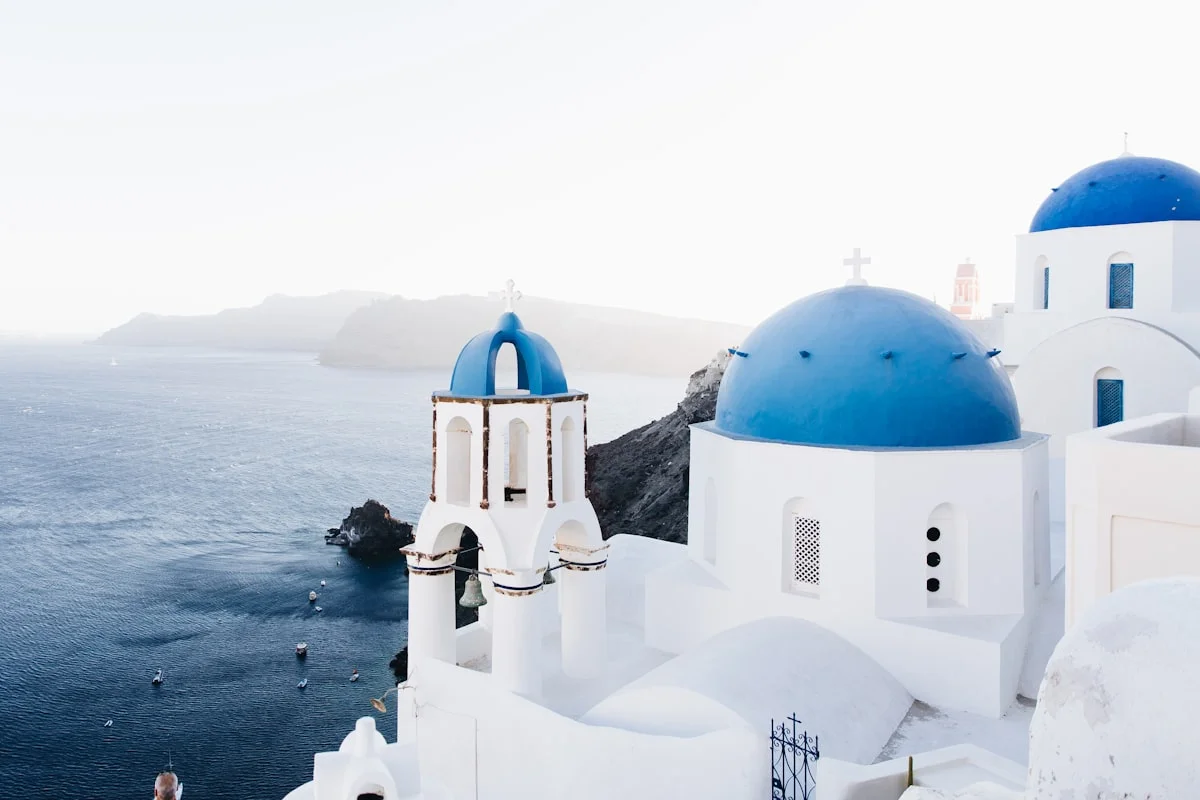
The algorithm has convinced you that a Greek island summer requires a specific set of ingredients: a cave pool overlooking a caldera, a €35 Greek salad, and a minimalist white dress. The algorithm has also convinced you that this experience costs a minimum of €300 a night.
It doesn't. The algorithm is lying to you by only showing you two islands: Santorini and Mykonos. They are the most heavily marketed islands in the Mediterranean, and their pricing reflects their Instagram status, not their intrinsic value.
The Cyclades—the specific island chain in the Aegean Sea that contains Santorini and Mykonos—contains roughly 30 inhabited islands. They all have the same basic architectural DNA: white-washed cubic houses, blue-domed churches, and arid, dramatic landscapes meeting the sea. But because the algorithm hasn't found the other 28 yet, their infrastructure is priced for locals, not for luxury tourists.
Why You Shouldn't Use Airbnb for These Islands
Before we get to the islands, a logistical warning. On the lesser-known islands, the local governments have been cracking down on unlicensed short-term rentals. If you use Airbnb or VRBO, you run the risk of booking an apartment that gets cancelled by local authorities the week before you arrive—leaving you stranded in July with zero alternative accommodation.
For these specific islands, you must use platforms that verify local licensing. This is why Hostelworld is your best weapon here. People associate Hostelworld with dorm beds, but their inventory in Greece is heavily weighted toward highly-rated, private family-run guesthouses that cost €40–€60 a night. Crucially, their listings are vetted for local compliance, and almost all offer free cancellation.
The 5 Islands That Still Have €50 Rooms
1. Andros: The "Artisan" Island
A one-hour ferry ride from the port of Rafina (closer to Athens than Piraeus), Andros is the greenest and wealthiest of the Cyclades historically, but it entirely missed the modern tourism boom. It has no international brand presence. What it does have is running water, incredible stone bridges, a world-class museum of modern art, and empty beaches. The main town, Chora, is a maze of elegant neoclassical mansions, not tourist shops. You can rent a private room in a renovated stone house here for €45 a night.
2. Tinos: The Marble Island
Tinos is directly next to Mykonos. Geographically, they are neighbors. Economically, they exist in different centuries. Tinos is Greece’s center for marble sculpture and Orthodox pilgrimage. The interior of the island is blanketed in terraced marble villages that look like they were carved out of the mountain. The famous dovecotes ( intricately carved stone houses for pigeons) are scattered across the hillsides. It has the exact same dry, windy, dramatic Cycladic landscape as Mykonos, but without the infrastructure designed to extract money from you. Private rooms average €50 a night.
3. Naxos: The "Real" Luxury
Naxos is the largest island in the Cyclades, and it has the most to offer. It has a massive mountain range, ancient ruins (the Portara temple is visually identical to antiquity), and extraordinarily long, sandy beaches—something Santorini entirely lacks. Because it has a domestic airport and a large agricultural economy, it doesn't rely solely on tourism to survive. This means prices remain grounded. You can get a beautiful, modern studio steps from the beach for €60 a night. Naxos is not a "budget hack"; it is simply a better island that happens to cost less.
4. Syros: The Architectural Capital
Syros is the administrative capital of the Cyclades, but nobody goes there. The main town, Ermoupoli, is built like a miniature Venice/Paris hybrid in the middle of the Aegean. It features grand neoclassical buildings, a stunning town square, and an opera house. It feels like a mainland European city that accidentally ended up on an island. Because it is a working port and administrative hub, it is full of life year-round, meaning the restaurants serve actual local food at local prices, not inflated tourist menus. Budget guesthouses here are abundant and cost around €45/night.
5. Sikinos & Folegandros: The Remote Duo
These two islands sit at the southern edge of the Cyclades. Folegandros (which we have covered in depth) is the more accessible of the two, with prices hovering around €60–€80. But if you want true isolation, Sikinos is the ultimate budget flex. It has almost no commercial tourism infrastructure. There are no nightclubs, no luxury boutiques, and very few cars. There is one main village, incredible hiking trails, and a sense of silence that is genuinely difficult to find in Europe in 2026. The few family-run rooms available on Hostelworld cost €35–€40 a night.