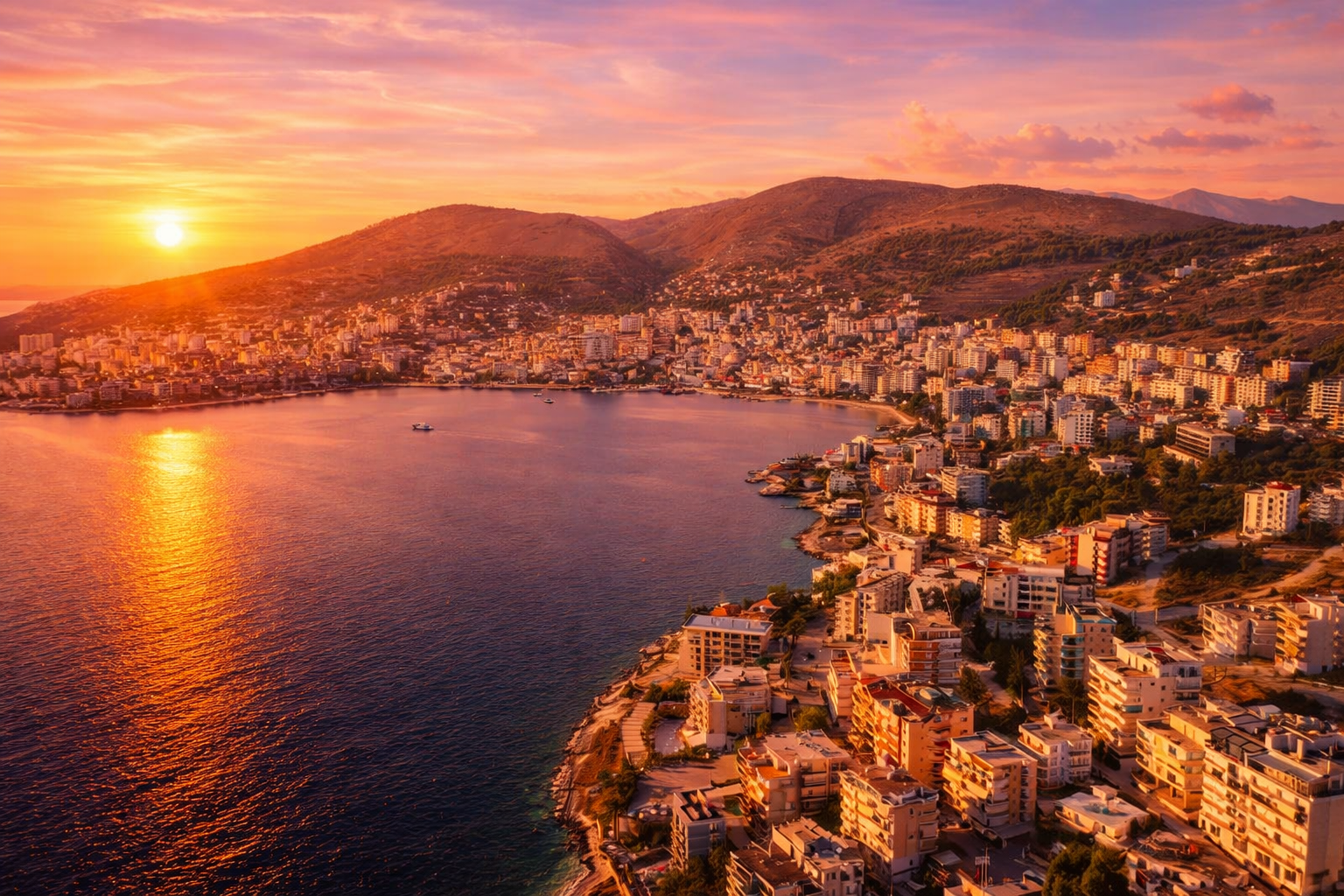
The ferry from Corfu to Sarandë is one of the most underrated border crossings in Europe. In the time it takes to get through security at a low-cost airline, you can cross an international maritime border, swap a Greek island for an emerging Mediterranean coastline, and cut your accommodation costs by 60%. This is the gateway to the Albanian Riviera — and it is remarkably easy once you know how it works.
It is also, if you arrive unprepared, one of the most chaotic 45 minutes of your summer. The operators change timetables without notice. The ticket offices at Corfu port are competitive to the point of aggression. The arrival process in Sarandë involves a specific sequence of desk visits that nobody explains to you. This guide fixes all of that.
The Ferry Operators: Which One to Take
There are three companies running this route. They all leave from the same port in Corfu town. They all arrive at the same port in Sarandë. The differences matter less than you'd think, but there are nuances:
Finikas Lines
The fastest option. Finikas runs a hydrofoil that does the crossing in roughly 30–40 minutes. It's the most comfortable ride in calm weather, but in a swell, the hydrofoil slams into waves in a way that upsets people who skipped breakfast. If you're prone to seasickness and the wind is up, take the conventional ferry instead. Tickets are typically at the top end — €22–€25 one-way.
Ionian Seaways
Runs a conventional car ferry. Slower (around 70 minutes) but noticeably more stable in rough weather. This is the one that takes vehicles, so if you're bringing a car, you're on Ionian. The interior cabin is air-conditioned, which matters in July and August. Foot passenger tickets usually run €19–€22.
Jonian Ferries
The third operator, generally matching Ionian on price and timing. They tend to be slightly less reliable with published schedules — their departures sometimes shift by 30–60 minutes depending on passenger numbers. Fine if you're flexible, less ideal if you have a tight connection in Sarandë.
Timetables & Prices for 2026
In peak summer (mid-June to early September), there are typically three to four departures daily from Corfu. The first ferry leaves around 08:30 or 09:00, which is the one you want if you're planning a day trip or trying to reach Ksamil by lunch. The last return from Sarandë is usually around 16:30 or 17:00 — miss it, and you're spending the night in Albania (which, frankly, is not the worst outcome).
In shoulder season (May and late September), the schedule drops to one or two crossings daily. Between October and April, service is sporadic and entirely weather-dependent. Do not attempt this crossing off-season without checking the operator's website the morning of departure.
How to Buy Tickets
You can buy tickets at the kiosks at Corfu port on the morning of departure. I have done this. I do not recommend it. In July and August, the queue forms early, the operators' representatives will physically step in front of you to redirect you to their specific booth, and the price you're quoted at the window may differ from what you saw online the night before.
Book online in advance through the operators' official websites (Finikas Lines or Ionian Seaways). It costs the same or less, it guarantees you a seat, and it removes the single most stressful part of the crossing. You will receive an e-ticket via email — show this at the specific operator's check-in desk at the port, not the generic terminal building.
What to Expect at Corfu Port
Corfu's ferry terminal is at the northern edge of the old town, a 10-minute walk from the Liston or a €5 taxi ride from anywhere central. Arrive 60 to 75 minutes before departure. You will need to check in at the specific operator's desk with your booking reference or passport.
There is a small café and a duty-free shop inside the departures area. The duty-free is genuinely useful — alcohol and cigarettes are cheaper here than in either Greece or Albania, and the Albanian customs officers at Sarandë do not inspect foot passengers with any regularity.
Boarding is occasionally chaotic. There is no assigned seating on any of the boats. If you want an outdoor seat with a view — and you do — position yourself near the boarding gate early. The upper deck fills within three minutes of the gate opening.
Arriving in Sarandë: The Process Nobody Explains
This is where most first-timers get confused. When you disembark in Sarandë, you do not simply walk out of the port. There is a specific sequence:
Step 1. Walk off the boat and into the terminal building immediately in front of you.
Step 2. Go to the police/immigration desk. Hand over your passport or EU ID. They will stamp you into Albania. This takes 2–5 minutes depending on crowd size.
Step 3. Walk out of the terminal. You are now in Sarandë. The town centre is a 5-minute walk straight ahead. The beach is to your left.
That's it. There is no customs check for foot passengers. There is nobody checking your luggage. The process is significantly faster and less adversarial than arriving at Tirana airport. If you're an EU citizen, the whole thing takes under three minutes. From the port exit, a taxi to Ksamil costs €15–€20, or you can walk 10 minutes to the local bus station for the €1 public bus.
The Best Day Trips from the Ferry
Most people taking this ferry fall into two categories: those staying in Albania for a week, and those crossing just for the day. If you're day-tripping from Corfu, you need to pre-book an organised tour to maximise your time. If you try to arrange transport and tickets independently on the day, you will lose half your day to logistics.
These are the three tours actually worth your time and money:
If you're staying in Corfu instead
If a day in Albania isn't enough and you want to stay on the Greek side, the boat cruises departing directly from Corfu port are the other major draw. There is exactly one that delivers on its promises:
Where to Stay in Sarandë
If you're crossing into Albania for more than a day, Sarandë is the practical base, but Ksamil is the one you actually want for beaches. Sarandë itself is better for nightlife, restaurants, and ferry connections. Here are the options worth your attention, split by budget:
For the splurge
For the sweet spot (€50–€80/night)


Also worth checking: Joanna Suites (from $59/night).
Staying Connected on Both Sides
You'll need mobile data in Greece to navigate to Corfu port, and data in Albania for buses, maps, and translating menus. A physical SIM swap at the border is impractical — the Albanian operators at Sarandë port charge tourist prices. A European eSIM activated before you leave home covers both countries without the hassle.
Frequently Asked Questions
How much is the ferry from Corfu to Sarandë?
A one-way foot passenger ticket costs between €19 and €25 depending on the ferry operator and how early you book. A return ticket is typically €35–€45. Taking a car costs significantly more — usually €80–€120 one-way.
How long is the ferry from Corfu to Sarandë?
The fastest ferries (Finikas Lines hydrofoil) take approximately 30–40 minutes. Larger conventional ferries like Ionian Seaways take around 70 minutes.
Do I need a visa for the Corfu to Sarandë ferry?
EU citizens do not need a visa for Albania — a valid ID card or passport is sufficient. UK, US, Canadian, and Australian citizens can enter Albania visa-free for 90 days within a 180-day period with a valid passport. Always check current requirements before travel.
Can I take my car on the ferry?
Yes, via Ionian Seaways. But it is expensive (€80–€120 one-way for a standard car) and requires advance booking. Note that driving in Albania is very different from Greece — road quality varies, and insurance requirements differ. Most travellers leave their car in Corfu and rely on buses and day tours.