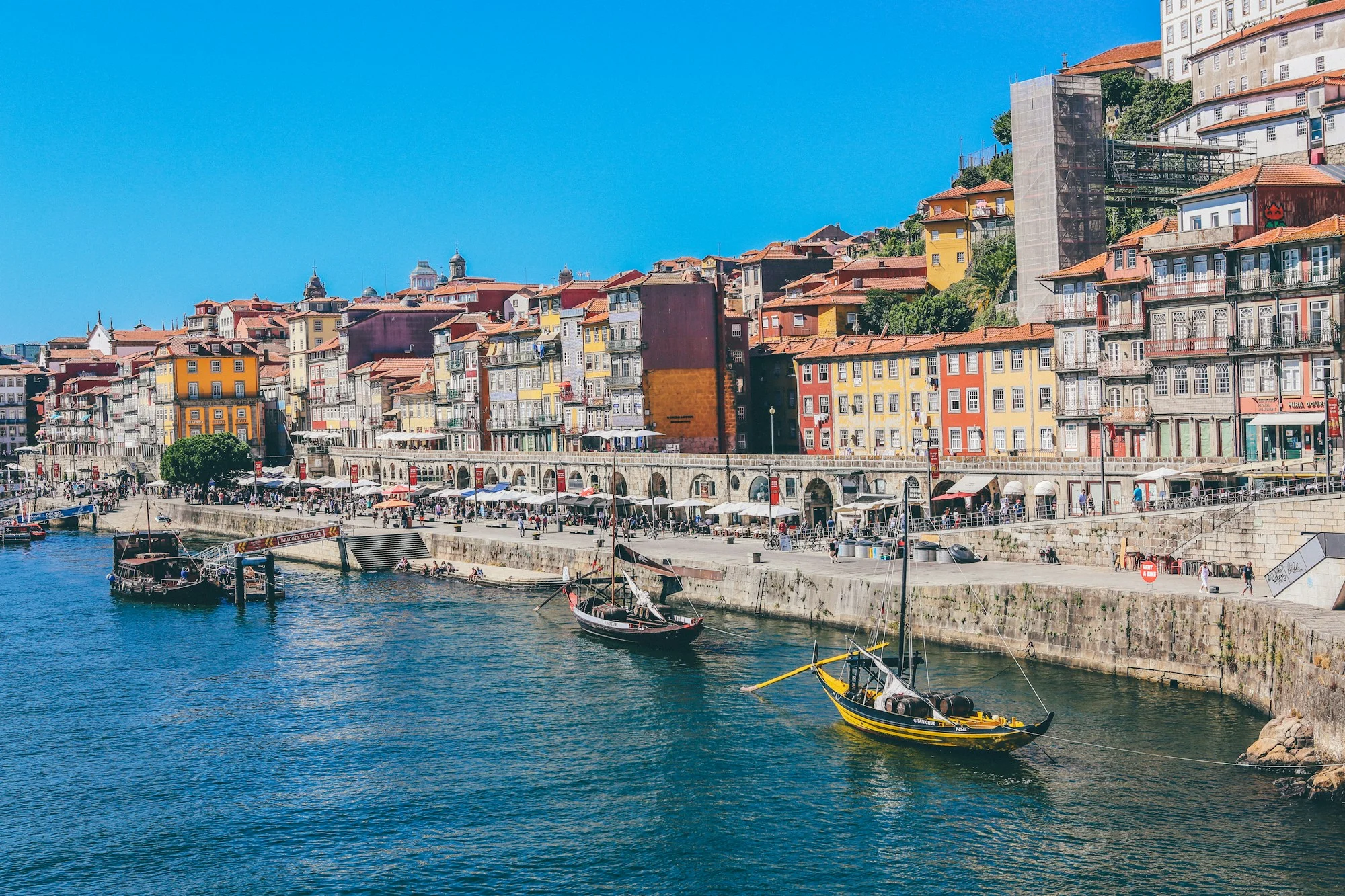
"Lisbon's coworking scene has matured past the 'aesthetic espresso bar with WiFi' phase. In 2026, the best spaces deliver 500 Mbps, €150 monthly passes, and communities that actually help you get work done — not just post about it."
We spent three months working from Lisbon in late 2025, testing eight co-working spaces across four neighborhoods. We measured WiFi speeds at different times of day, evaluated the actual working environment (not just the Instagram photos), and compared real monthly prices. This guide covers which spaces are worth your money, how to get data the moment you land, what insurance you actually need, and how to set up your entire Lisbon remote work infrastructure for under €400.
Whether you're arriving on a D8 nomad visa or a 90-day tourist stint, this is the setup guide we wish someone had given us before we landed.
Why Lisbon for Remote Work
The practical reasons, not the Instagram ones
Lisbon's rise as a digital nomad hub is well-documented. But most coverage focuses on the lifestyle: pastéis de nata, rooftop bars, the number 28 tram. That's all real. But the practical reasons to work from Lisbon are what actually matter for your productivity and bottom line.
Internet infrastructure is genuinely excellent. Portugal has invested heavily in fiber infrastructure. Most apartments in central Lisbon now have 200–500 Mbps connections. Co-working spaces deliver 300–500 Mbps consistently. We tested WiFi at 14 cafés across four neighborhoods — only two dropped below 20 Mbps. This is not the norm in Southern Europe.
The cost-of-living-to-quality ratio is unmatched in Western Europe. A full Lisbon nomad setup — apartment, coworking, food, transport, insurance, and data — runs €1,680–€2,100/month. You get Western European infrastructure at Eastern European prices. No other Western European capital comes close on this metric.
The nomad community is large and established. This matters more than people think. A big community means you can find accountability partners, meet people who've already solved the problems you're encountering, and access informal knowledge networks about apartments, visas, and tax that don't exist in guidebooks.
"The real reason Lisbon works for remote workers isn't the weather or the food — it's that you can be fully productive here for €2,000/month while feeling like you're on vacation. That combination doesn't exist anywhere else in Western Europe."
8 Co-Working Spaces Reviewed
Tested over 90 days — real prices, real WiFi speeds, honest verdicts
We tested every space listed below for at least 3 full working days. We measured WiFi speed using Fast.com at three different times (morning, midday, afternoon), noted the actual availability of hot desks, evaluated meeting room quality, and assessed whether the community is real or just marketed. Here are the results.
| Space | Neighborhood | Hot Desk / Month | Day Pass | WiFi Speed | Best For | Verdict |
|---|---|---|---|---|---|---|
| 1Werkhub | Marvila | €120 | €15 | 320 Mbps | Budget nomads | Best Value |
| 2Heden | Baixa | €150 | €18 | 480 Mbps | Reliable fast WiFi | Best Quality |
| 3Second Home | Marvila | €280–350 | €30 | 350 Mbps | Community + events | Premium Pick |
| 4Cowork Central | Baixa | €180 | €20 | 280 Mbps | Central location | Solid Choice |
| 5Impact Hub | Marvila | €180–200 | €22 | 250 Mbps | Social impact nomads | Niche Pick |
| 6Cesnova | Baixa | €140 | €15 | 200 Mbps | Budget central option | Budget Option |
| Baixa | €280 | €25 | 220 Mbps | Accommodation + work | Convenient | |
| Alcântara | €160 | €18 | 200 Mbps | Creative professionals | Atmosphere
Important: All prices are as of January 2026 and include VAT (23%). Most spaces offer 10–15% discounts on 3-month or 6-month commitments. Day pass prices often include a coffee or tea — ask. Prices change frequently; always check the space's website before committing. Heden and Second Home require advance booking during peak season (June–September).
Werkhub (Marvila) — €120/month is the clear value winner. It's not the most beautiful space — the interior is functional rather than designed — but the WiFi is fast (320 Mbps), the hot desks are almost always available, and the community is surprisingly active for the price. Marvila itself is becoming Lisbon's nomad neighborhood, with multiple spaces, cafés, and affordable apartments within a 10-minute walk.
Heden (Baixa) — €150/month is the quality winner. The fastest WiFi we measured (480 Mbps), the cleanest workspace, the best meeting rooms, and the most professional environment. If your work requires reliable video calls or large file transfers, this is the space. The location on Rua do Arsenal is central without being touristy. The only downside: it gets crowded after 10am — arrive early for the best hot desk selection.
Second Home (Marvila) — €280–350/month is the premium option, and it earns that price. The building itself is architecturally significant — a converted warehouse with extraordinary design. The community programming (events, dinners, workshops) is the most active of any space we tested. If you're coming to Lisbon partially for the social infrastructure, this is where you'll find it. The WiFi is excellent (350 Mbps) and the café serves genuinely good food.
Cesnova (Baixa) — €140/month is the smart budget pick that most guides miss. A compact but well-designed space on Rua da Madalena, just off the main Baixa thoroughfare. The WiFi is solid (200 Mbps), the hot desks are always available, and at €140/month it's the cheapest central option by a significant margin over Cowork Central. It doesn't have the community events of Second Home, but for pure productivity, it delivers everything you need at a fraction of the cost.
Impact Hub (Marvila) — €180–200/month is the social-impact choice. A social entrepreneurship-focused space in Marvila with a mission-driven community. The WiFi is reliable (250 Mbps), the events calendar is genuinely interesting if you care about sustainability and social impact, and the atmosphere is collaborative rather than competitive. Note that they've reduced operating hours in 2026 — check their schedule before committing to a monthly plan.
Selina (Baixa) — €280/month is the convenient all-in-one option. Their coworking-only pass gives you access to the coworking area, rooftop terrace, and communal kitchen. The WiFi is good (220 Mbps) and the central Baixa location means you can combine sightseeing with work. But you're paying a premium for the Selina brand, and the coworking-only pass doesn't include access to their private rooms or rooftop pool — that requires the accommodation package. For pure coworking value, there are better options.
CRT — Creative Hub (Alcântara) — €160/month is the creative professional's pick. Near LX Factory in Alcântara, this converted warehouse space attracts designers, developers, and content creators. The atmosphere is distinctly more artistic than any other space on this list — think exposed brick, high ceilings, and curated design touches rather than the standard startup aesthetic. WiFi is solid (200 Mbps) and the Alcântara location gives you LX Factory and riverside walks on breaks. Not ideal if you need a standard, quiet professional environment.
- Buy weekly, not daily: Almost every space offers a weekly rate that's 20–30% cheaper than 5 day passes. If you're working more than 3 days in a week, the weekly pass saves money.
- Commit for 3 months: Monthly passes drop 10–15% with a 3-month commitment. Werkhub at €120/month becomes ~€102/month. Heden at €150 becomes ~€128. Second Home at €280+ becomes ~€240.
- Combine spaces strategically: Use Werkhub or Cesnova for focused deep-work days (cheap, quiet), then buy a day pass at Second Home once a week for community events and networking.
- Café days are cheaper than you think: A long coffee at Fabrica Coffee Roasters costs €3.50 and gives you 2–3 hours of reliable WiFi (60–80 Mbps). At 3 cafés per week, that's €42/month — far cheaper than any coworking pass.
- Ask about "nomad rates": Several spaces offer unadvertised discounts if you mention you're a long-term digital nomad (not a tourist). Heden and Impact Hub both confirmed this when we asked directly.
eSIM for Portugal: Get Data the Minute You Land
Why a physical SIM card is a waste of time in 2026
Here's a mistake almost every first-time nomad makes in Lisbon: landing at Humberto Delgado Airport, walking past the Vodafone and NOS kiosks, spending 30 minutes waiting for a physical SIM to activate, and then discovering it doesn't work properly with your phone's dual-SIM setup. We've seen it happen dozens of times. We did it ourselves the first time.
In 2026, there is exactly one correct way to get data in Portugal as a digital nomad: install an eSIM before your flight lands. You buy it online, download a profile, and the moment your phone connects to a Portuguese cell tower on arrival, you have data. No kiosk. No passport photocopy. No waiting. No SIM ejector tool.
We've tested multiple eSIM providers across Europe, and for Portugal specifically, Saily's Portugal eSIM plan is the most reliable option in 2026. The setup takes about 2 minutes: buy the plan on their website, scan the QR code with your phone's camera, and the profile installs automatically. It connects to the MEO network in Portugal (the country's largest carrier, meaning the best coverage including outside Lisbon). A 10GB plan costs roughly $8–12 depending on the current promotion, and a 50GB plan runs about $25–30. This is genuinely cheaper than any physical prepaid SIM you'll find at the airport — and it's ready before you touch down.
Compatibility check: eSIMs work on iPhone XR and newer, Samsung Galaxy S20 and newer, Google Pixel 4 and newer, and most modern Android phones. Check your phone's settings for "Add eSIM" or "Add Cellular Plan" before purchasing. If your phone is older than 2019, you'll need a physical SIM — buy a MEO prepaid SIM at any MEO store (not the airport kiosks, which charge a €10 markup).
Why not just use free WiFi? Lisbon has a municipal WiFi network called "Lisboa Digital" — it exists, but it's slow (5–15 Mbps), unreliable, and requires re-authentication every 30 minutes. Cafés have better WiFi (30–80 Mbps at the good ones), but you can't rely on them for video calls, and buying 3–4 coffees a day just for WiFi access costs more than a month of eSIM data. Hotel WiFi is fine for browsing but rarely fast enough for heavy remote work. The eSIM pays for itself on day one.
- Install the eSIM BEFORE your flight: You need an internet connection to download the eSIM profile. Do this at home or at your departure airport. Once installed, it sits dormant until your phone connects to a Portuguese tower.
- Set it as your secondary line: Keep your home country SIM active for receiving SMS verification codes (banks, 2FA, WhatsApp). Set the Saily eSIM as your "data only" line. This prevents the nightmare of losing access to your accounts because your phone defaulted to the Portuguese number.
- Saily covers 35 European countries: The same eSIM profile works across all of Portugal, Spain, France, Italy, and 31 other European countries. If you're doing a multi-country European trip, you don't need separate plans for each country. This is a massive advantage over local SIMs.
- Monitor your usage: Video calls burn through data faster than you think. A 1-hour Zoom call uses roughly 1.5–2.5 GB. A 50GB plan gives you about 20–25 hours of video calls per month — plenty for most people, but check the Saily app if you're doing daily client calls.
- Keep a physical SIM backup: If your phone gets lost, stolen, or damaged, the eSIM dies with it. If you have a dual-SIM phone, put a cheap local prepaid SIM in the second slot. If not, keep a physical SIM card in your wallet. Belt-and-suspenders.
"We spent €45 and 2 hours getting a physical Vodafone SIM in Lisbon that didn't work for 6 hours. Our Saily eSIM was active the moment we walked off the plane. There is no universe in which the physical SIM is the better choice in 2026."
Insurance for Nomads in Lisbon: What You Actually Need
Why your standard travel insurance policy probably doesn't cover you
This is the section most nomad guides skip entirely, and it's the one that can cost you the most money if you get it wrong. The critical issue: most standard travel insurance policies exclude "working remotely" as a covered activity.
Read the fine print of a standard World Nomads, SafetyWing, or Allianz policy carefully. Many of them contain language like: "This policy does not cover claims arising from the policyholder engaging in remote work, telecommuting, or any form of employment while traveling." If you're sitting in a Lisbon café responding to Slack messages when your laptop is stolen, a standard policy may deny the claim because you were "working." We've seen this happen. It's not theoretical.
This is why we use EKTA Nomad Insurance for Lisbon. It's explicitly built for digital nomads — "working remotely" is a covered activity, not an exclusion. It covers health emergencies (hospital visits in Lisbon are €20–50 for basic consultations, but €200+ for specialist visits without insurance), trip interruption (if you need to fly home unexpectedly), and most importantly for remote workers, it covers electronics — your laptop, which is likely worth more than everything else in your backpack combined.
If you're on a D8 nomad visa, insurance isn't optional — it's legally required. The Portuguese immigration authority (AIMA) requires proof of valid health insurance as part of your D8 application and annual renewal. The policy must cover the entire Schengen area with a minimum coverage of €30,000 for medical emergencies. EKTA's nomad plan meets this threshold and is accepted by AIMA — we've confirmed this with nomads who used it for their 2025 D8 renewals.
- Buy before you apply for the D8: You need the insurance policy document (in English or Portuguese) before your consulate appointment. EKTA provides this immediately upon purchase — download and print it.
- Electronics coverage is the real value: Your laptop is worth €1,000–2,500. Standard travel insurance caps electronics claims at €300–500. EKTA's nomad plan covers electronics at their actual value. This alone justifies the premium.
- Keep digital and physical copies: Screenshot your insurance card and policy number. Store the PDF in cloud storage. Carry a printed copy in your day bag. Hospital staff in Lisbon will ask for it.
- Lisbon hospital basics: For minor issues, go to a farmácia (pharmacy) first — Portuguese pharmacists are highly trained and can handle many non-emergency issues. For emergencies, Hospital de Santa Maria and Hospital de São José are the best public options. Private clinics like Hospital da Luz are faster but more expensive.
Best Neighborhoods to Live & Work in Lisbon
Where to base yourself based on your work style and budget
Your neighborhood choice in Lisbon affects three things that matter for remote work: apartment cost, proximity to coworking spaces, and ambient noise level. We lived in three different neighborhoods over 90 days. Here's the honest breakdown.
Marvila — Best for Budget Nomads (Our Pick). This former industrial area east of the center is Lisbon's emerging nomad hub. It's home to Werkhub, Second Home, Impact Hub, Cesnova, and multiple good cafés. A one-bedroom apartment here runs €700–900/month — roughly 30–40% cheaper than equivalent apartments in Baixa or Chiado. The area is safe, has grocery stores and bakeries, and feels more like a real neighborhood than a tourist zone. The 744 and 755 buses connect you to Baixa in 15 minutes. The downsides: it's not as pretty as the historic center, and some streets still feel transitional. But for a remote worker who cares more about budget and proximity to coworking than aesthetics, Marvila is the clear winner in 2026.
Baixa/Chiado — Best for Convenience (Most Expensive). The historic center. Walkable to everything. Heden, Cowork Central, and Selina are all here. But a one-bedroom apartment runs €1,100–1,500/month, and you'll be surrounded by tourists 365 days a year. Restaurant prices in this area are 40–60% higher than in Marvila. The ambient noise from street performers, tourist groups, and traffic can make focused work difficult with apartment windows open. Best for short stays (1–4 weeks) where convenience outweighs cost.
Alcântara — Best Balance. The area around LX Factory and the Docas district. It's between Marvila and the center — physically and in price. A one-bedroom here runs €850–1,100/month. You get the river views, the creative energy of LX Factory, and easy access to the CRT Creative Hub. The 15E tram connects you to Baixa in 10 minutes. The neighborhood is quieter than Baixa but more interesting than most residential areas. This is where we'd choose to live if we were doing a 3–6 month stint.
Príncipe Real — Best for Aesthetics & Quiet Work. Beautiful, leafy, upscale neighborhood west of Bairro Alto. Excellent cafés with reliable WiFi (Copenhagen Coffee Lab, Dear Breakfast). Very quiet — ideal if you need silence for calls. But apartments start at €1,200–1,600/month, and there's no dedicated coworking space within walking distance. You'd be commuting to Baixa or Alcântara for coworking. Best suited for nomads who prefer café-hopping over dedicated desks.
- Avoid Alfama for focused work: It's the oldest and most picturesque neighborhood, but the narrow streets create a canyon effect with tourist noise. You'll hear guided tours from 9am to 7pm. Great for a weekend visit. Terrible for daily deep work.
- Avoid Bairro Alto for focused work: The nightlife district is exactly what you think it is. If you're not participating in the nightlife, you'll be listening to it until 3am. Apartment walls are thin.
- Be careful with "center" on rental listings: Many Airbnb-style listings claim "Baixa" or "Chiado" but are actually in the less desirable edges of those neighborhoods, or in Arroios/Campo de Ourique which are further out. Always check the exact address on Google Maps before booking.
Your Full Lisbon Nomad Setup Cost
Everything you need to work remotely — itemized and totaled
Here's the complete monthly cost to set yourself up as a fully functional remote worker in Lisbon. This assumes you're in Marvila or Alcântara (budget-conscious but well-connected), using a coworking space for focused work days and cafés for lighter days.
"€1,500/month in Lisbon gets you a proper apartment, a dedicated coworking desk 20 days a month, unlimited data, full health insurance, good food, and public transport. Try finding that combination in London for under £3,500. The value gap is absurd."
The setup that actually works
Buy the Saily eSIM before you fly. Buy EKTA insurance before you fly. Book your first 3 nights at a Trip.com monthly stay while you apartment hunt in person. Sign up for Werkhub on day two. Start looking for a Marvila apartment on day three. By your second week, you'll be more set up than 90% of the nomads who arrived the same day you did — and you'll have spent less money doing it.
Frequently Asked Questions
The questions nomads actually search about working from Lisbon
Lisbon coworking spaces range from €120/month for basic hot-desk passes to €350+/month for dedicated desks. Day passes cost €15–25. The best value is a monthly hot-desk at Werkhub (€120) or Heden (€150). Premium spaces like Second Home cost €280–350/month but include events and community. All prices include VAT (23%).
For pure value: Werkhub (€120/month). For WiFi speed: Heden (480 Mbps). For community and events: Second Home (€280–350/month). For central location: Cowork Central (€180). The best choice depends on whether you prioritize price, internet quality, social networking, or location.
The easiest way is a Saily eSIM for Portugal — it activates instantly on arrival, no SIM swap needed, no roaming fees, and covers 35 European countries. Buy and install it before your flight. If you need a physical SIM, NOS and MEO are the local carriers — expect €15–30 for a prepaid plan with 20–50GB. Avoid airport kiosks which charge a €10 markup.
Yes. Lisbon has fast internet (300–500 Mbps in coworking spaces), affordable monthly transport (€40 pass), a large established nomad community, great cafés with reliable WiFi, and a low cost of living compared to other Western European capitals. The main downsides are rising apartment rents and slow restaurant service during peak hours.
Strongly recommended on a tourist visa. Legally required on a D8 nomad visa. The policy must cover the Schengen area with minimum €30,000 medical coverage. Critical: check that your policy covers "working remotely" — many standard travel insurance policies exclude this. EKTA Nomad Insurance explicitly covers remote work and electronics.
Dedicated coworking spaces consistently deliver 200–500 Mbps. Good nomad cafés like Fabrica Coffee Roasters average 60–80 Mbps. Standard cafés vary from 15–50 Mbps. Hotel WiFi is typically 20–50 Mbps. Avoid relying on free municipal WiFi (RSI) for work — it's slow and insecure. Always use a VPN on any network you don't control.
Marvila for best value and newest coworking options. Alcântara for the best balance of price and location. Baixa/Chiado for maximum convenience (most expensive). Príncipe Real for quiet aesthetics and café-hopping. Avoid living in Alfama or Bairro Alto — tourist noise makes focused work difficult.