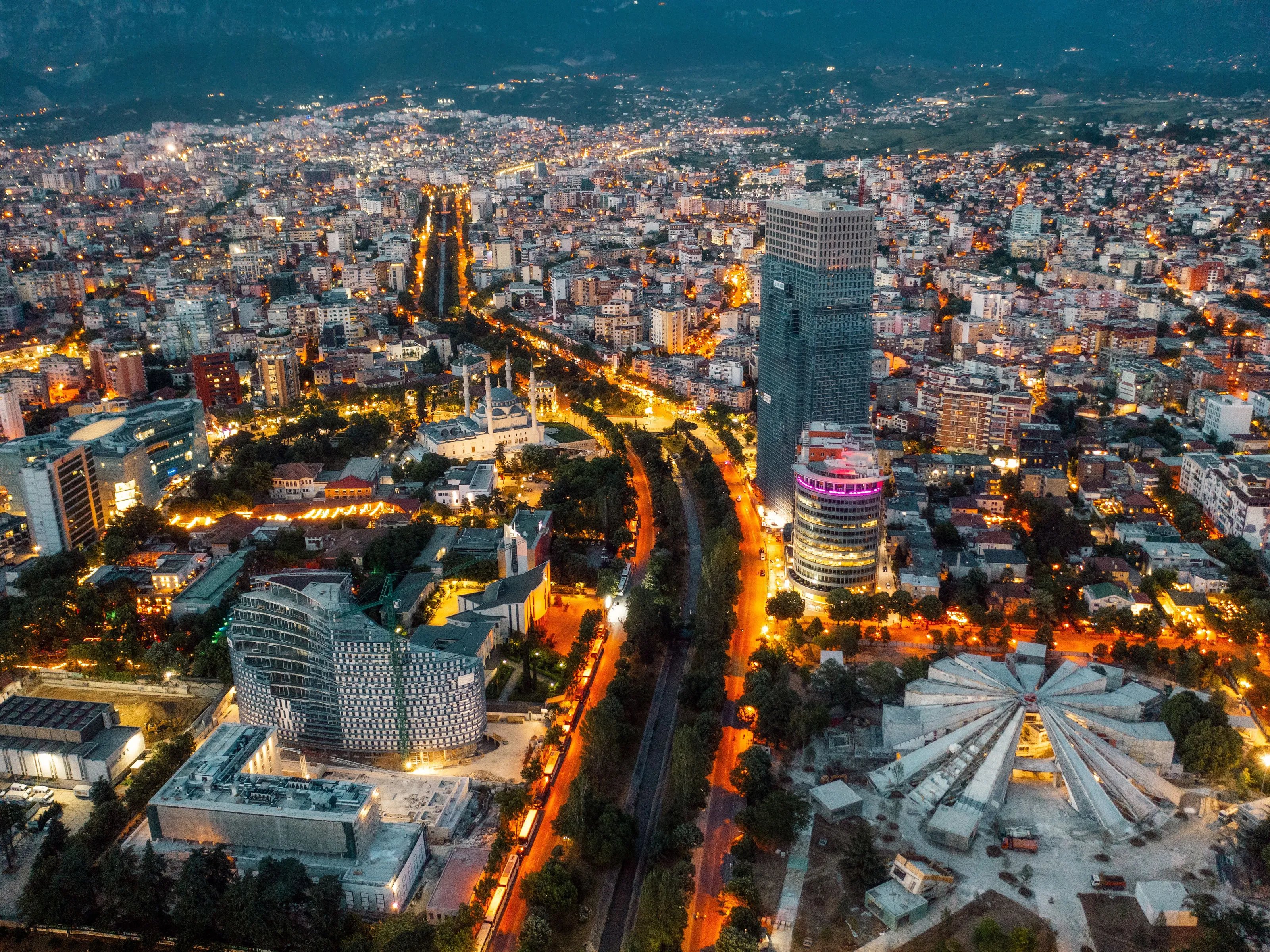
Before You Go: The Essentials
Tirana in 2 days is the right amount of time for a first visit — enough to understand why the city is one of Europe's most genuinely surprising capitals, without overstaying the point where the charm of a city-in-transformation starts to feel repetitive. Most visitors to Albania use Tirana as an arrival and departure gateway for the Riviera, spend one night, and leave. Spending two nights and actually engaging with the city is the upgrade that most people wish they'd made.
Day One: The City's Bones
9:00am — Skanderbeg Square. The centre of the city and the obvious starting point. The square is enormous — scaled for Soviet-era parades — surrounded by the National History Museum (unmistakable mosaic facade), the Et'hem Bey Mosque (18th century, surviving Communist atheism intact), and the Clock Tower. The equestrian statue of Skanderbeg, national hero, occupies the centre. Spend 20 minutes here to calibrate your sense of the city's scale.
10:00am — National History Museum. Albania's largest museum and the best single introduction to the country's extraordinary history: Illyrian antiquity, Ottoman centuries, the national awakening, the Communist dictatorship (1944–1992), and the post-Communist transition. The Communist-era exhibits are particularly important context for understanding everything else you'll see in the country. Allow 1.5–2 hours. Entry is approximately €3.
12:30pm — Blloku for lunch. Blloku was literally the private residential quarter of Enver Hoxha and the Communist party elite — inaccessible to ordinary Albanians until 1991. Today it is the city's most vibrant neighbourhood: restaurants, cafés, bars, boutiques, and street art packed into a grid of tree-lined streets. Have lunch at one of the sidewalk restaurants. The food is exceptional by capital-city standards and priced at levels that feel implausible for the quality.
2:00pm — Tirana Street Art Walk. Tirana has one of the best street art scenes in Europe — partly organic, partly a legacy of the painted-buildings policy initiated by former mayor Edi Rama (now Prime Minister), who commissioned artists to paint the city's grey Communist apartment blocks in geometric colour. The area around Blloku and the streets north toward the Grand Park have the highest concentration. No tour needed; walking with your phone and Google Maps is sufficient.
3:30pm — Bunk'Art 2. A converted Cold War nuclear bunker under the Ministry of Internal Affairs, now a museum dedicated to the Communist secret police (Sigurimi) and state repression. One of the most genuinely unsettling and important museum experiences in Europe — the original interrogation rooms, filing systems, and surveillance equipment are intact. Not a comfortable visit; an essential one. Entry approximately €4. (Bunk'Art 1, in a larger bunker outside the city, is the alternative — equally remarkable, focuses more on military history.)
Evening — Dinner in Blloku. Tirana's restaurant scene has developed rapidly. The area around Blloku has everything from traditional Albanian tavernas (byrek, tave kosi, ferges) to excellent contemporary restaurants. Budget €15–30 per person for a full dinner with wine. The streets come alive after 8pm — Albanians eat late. After dinner, the same streets serve as the city's nightlife circuit.
Day Two: Depth and Departure
9:00am — Pazari i Ri (New Bazaar). Tirana's restored Ottoman-era market, reopened in 2016 after complete reconstruction. Local produce — cheese, olives, spices, fresh bread — sold by vendors who have been at the same stalls for decades. The covered section has excellent coffee. Buy provisions here for the drive to the Riviera: a round of local cheese, a jar of pickled peppers, and whatever the vendor recommends. This is also the best place to change currency at favourable rates if you haven't already sorted a travel card.
10:30am — Mount Dajti Cable Car (Dajti Ekspres). A 15-minute drive east of the city, the cable car rises 1,613 metres up Mount Dajti in 15 minutes with panoramic views over Tirana and, on clear days, the Adriatic coast. The mountain top has a restaurant and walking trails. Worth it if the weather is clear; skip if it's overcast (there will be nothing to see). Return trip costs approximately €8.
1:00pm — Grand Park (Parku i Madh). A large urban park south of the centre with an artificial lake, walking paths, and the significantly less-visited National Gallery of Arts (strong collection of Social Realist art — state-commissioned work from the Communist era that is simultaneously propagandistic and technically accomplished). Good for a calm hour between the intensity of Bunk'Art and the drive south.
Afternoon — Drive to the Riviera. If you've hired a car, this is the afternoon to start the SH8. The drive from Tirana to Sarandë takes 3.5–4 hours in normal traffic. Leaving Tirana by 2–3pm gets you to Ksamil or Himara before dark. The drive itself, particularly the coastal section south of Vlorë, is worth the journey time — it is one of the best coastal drives in Europe and a direct continuation of what Tirana started: Albania, unfiltered, extraordinary.
If you have a third day: Krujë. 45 minutes north of Tirana. A medieval castle town on a ridge with views over the Albanian plain, the Skanderbeg Museum, and an Ottoman bazaar that sells handmade traditional crafts in a covered street unchanged since the 15th century. The most atmospheric half-day trip from Tirana and the one most visitors wish they'd known about.
Where to Eat in Tirana
Traditional Albanian
- Tave kosi — slow-baked lamb with yoghurt and egg. Albania's national dish. Order it everywhere.
- Ferges — peppers, tomatoes, and cottage cheese baked together. Better than it sounds.
- Byrek — filo pastry with spinach, cheese, or meat. Ubiquitous, excellent, costs next to nothing.
- Trilece — three-milk cake, the Albanian dessert that every bakery does differently. Try several versions.
Where to Sit
Blloku for everything from casual lunch to proper dinner. The streets around Rruga Ismail Qemali and Rruga Pjetër Bogdani have the highest concentration of good restaurants. Budget €10–15 per person for a full traditional meal; €20–30 for a contemporary restaurant dinner.
Practical Logistics
Getting from the Airport
Tirana International Airport is 17km from the city centre. Official taxis are available from the rank outside arrivals — agree on a price before getting in (€15–25 to the centre is reasonable). The Rinas Express bus runs hourly to the centre for €3. Bolt operates in Tirana and is the most reliable option if you have a local SIM or data.
Getting Around Tirana
The centre of Tirana is compact and walkable — most Day 1 sights are within 1.5km of Skanderbeg Square. Use Bolt for anything further. The Grand Park and Mount Dajti require a taxi or car.
Money
Tirana is the most card-friendly city in Albania — restaurants, hotels, and most shops accept cards. ATMs are widely available. Use a zero-fee travel card and decline dynamic currency conversion. See our Albanian currency guide for the details.