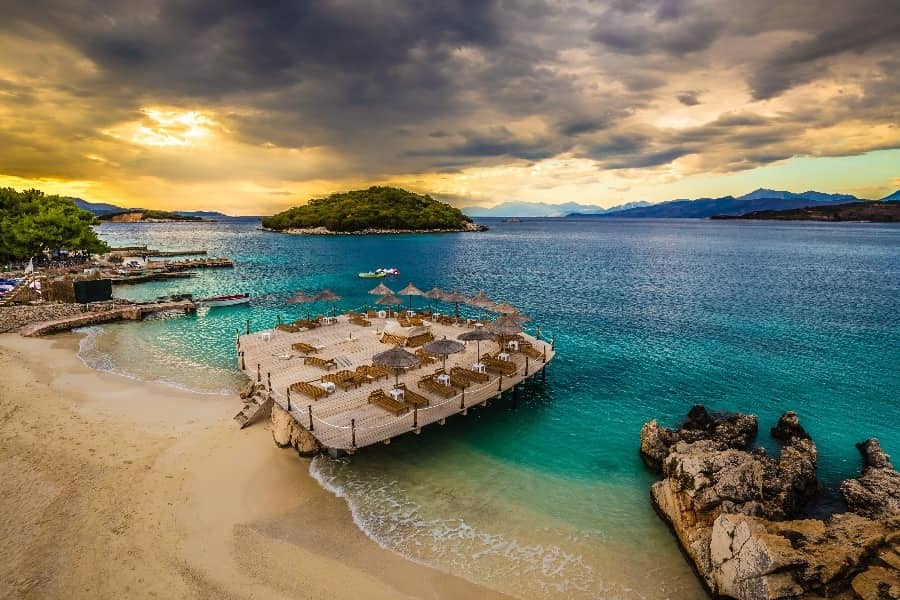
Ksamil is the beach destination that changes people's relationship with Mediterranean travel. The Ksamil beach guide question we get asked most often is simply: "is it really that blue?" — and the honest answer is yes, the water colour in Ksamil is genuinely that extraordinary, and no, you don't need a filter. What you do need is this guide, because Ksamil has a handful of specific things that first-time visitors get wrong.
The Beaches — Which Are Actually Worth It
Ksamil has several distinct beach areas within a 3km radius of the village. They vary significantly in quality, crowd levels, and what you pay for access.
The most famous and most photographed beaches in Ksamil, facing the three small offshore islands. The water here is the colour that ends up on every travel blog — shallow, crystal clear, graduated from turquoise to deep blue in fifty metres. There are sun beds (€5–8 each) on the main sections, but the northern stretch requires some scrambling over rocks and is completely free and significantly less crowded. The islands themselves are reachable by water taxi (€3–5 return) or kayak.
Located 1.5km south of the main village, Pulebardha is Ksamil's best-kept secret. Slightly smaller, more sheltered, with calmer water than the main beaches. No organised sun bed rental — it's predominantly locals and people who've done some research. The walk from town is twenty minutes on a decent path. Worth it.
The most accessible beach — 200 metres from the main strip of restaurants and bars. Organised sun beds, a bar, and reliable water taxis to the islands. Gets crowded in July–August but remains manageable by Mediterranean resort standards. Good for an afternoon rather than a full day — use it as your base for the islands.
North of the main village, accessible by following the coastal path for 20–40 minutes or by water taxi, are a series of small coves with no infrastructure, no sun beds, and no other tourists. The water is equivalent quality to the Three Islands beaches. These are where you go when you've done the main circuit and want to experience what Ksamil felt like five years ago. Bring your own water and shade.
Getting to the Ksamil Islands
The three small islands that give the beaches their name sit 200–400 metres offshore. Getting to them is straightforward:
- Water taxi: Small boats depart from the main beach throughout the day in summer. Cost is €3–5 return. The crossing takes 5–10 minutes. Boats run until early evening but start thinning out from 5pm — plan to return by 4:30 if you want options.
- Kayak rental: Available from the main beach for €8–12/hour. Paddling to the nearest island takes about 15 minutes. The most enjoyable way to see all three independently.
- Paddleboard: Also available for rental. The water between shore and islands is calm enough for beginners in normal weather.
The islands themselves are small — a few hundred metres across — with rocky shorelines, some flat swimming areas, and no facilities. Bring water. The snorkelling around the island perimeters is excellent: visibility to 10–15 metres, sea grass meadows, and occasional octopus sightings.
When to Visit Ksamil
June is the best month. Water temperature is 22–24°C — comfortably warm for swimming. Crowds are at 30–40% of peak. Prices are at off-shoulder rates. The light in June is extraordinary — long evenings, golden hour starting around 7pm. Restaurants are fully open, accommodation is available on short notice, and you'll share the Three Islands beaches with a manageable number of people rather than a queue.
September is equally good and often better for food — the end-of-season mentality in Ksamil's restaurants produces some genuinely exceptional evenings where the owner comes and sits down with you and the fish is whatever came in that morning.
July and August are fine but noticeably busier. Accommodation prices roughly double. The main beaches get crowded by 10am. It is still far less crowded than Mykonos, Positano, or Dubrovnik at peak, but the gap from June is significant. If you must travel in peak summer, arrive at the beaches before 9am or after 4pm.
May works for solitude seekers who don't need warm water for swimming — some restaurants and accommodation are still opening for the season, and prices are very low.
Getting to Ksamil
From Tirana (most common route)
Hire a car at Tirana airport and drive the SH8 coastal road — 3.5 hours, one of the most scenic drives in Europe. Alternatively, Sarandë has direct buses from Tirana (4 hours), and Ksamil is a 20-minute taxi from Sarandë.
From Corfu (the best route for island hoppers)
The Corfu–Sarandë ferry takes 45 minutes and runs multiple times daily in summer. From Sarandë port, a taxi to Ksamil costs €10–15. This is the route for anyone combining Albania with the Greek islands — see our Corfu to Sarandë ferry guide for the complete booking process.
Where to Stay in Ksamil
The accommodation options in Ksamil split cleanly into two types: family-run guesthouses (the right choice) and newer resort-style hotels (functional but characterless). The guesthouses, built by local families who've been on this coastline for generations, offer sea views, included breakfast with local produce, and the kind of personal service that chains can't manufacture.
For specific recommendations, the guesthouses set slightly back from the main beach give you views without the main-strip noise. Booking 6–8 weeks ahead is adequate for June/September; for July and August, book 3–4 months out — the best properties fill fast.
What Does Ksamil Cost?
- Sun bed on main beach: €5–10/day. Northern rocky sections: free.
- Island boat taxi: €3–5 return.
- Kayak rental: €8–12/hour.
- Lunch for two (seafood + drinks): €15–25 at a local restaurant. €25–40 at a beach bar.
- Dinner for two (full meal + wine): €20–35 at a local restaurant. €40–60 at a sea-view terrace restaurant.
- Guesthouse room (June/Sept): €40–80/night with sea view, breakfast included.
- Guesthouse room (July/Aug): €70–130/night.
- Butrint day trip: €30–45 per person with transport and guide.
Albania uses the Albanian Lek, not the Euro. See our full Albanian currency guide for how to pay without losing money to bank fees.