Santorini has a problem, and the problem is that everyone knows about Santorini. The sunsets — which are real, and genuinely beautiful — now have queuing systems. The caldera views come with a €22 entrance fee to the spot that used to be a public terrace. The famous blue domes of Oia are surrounded, at any given moment, by approximately four thousand people holding phones above their heads at the same angle.
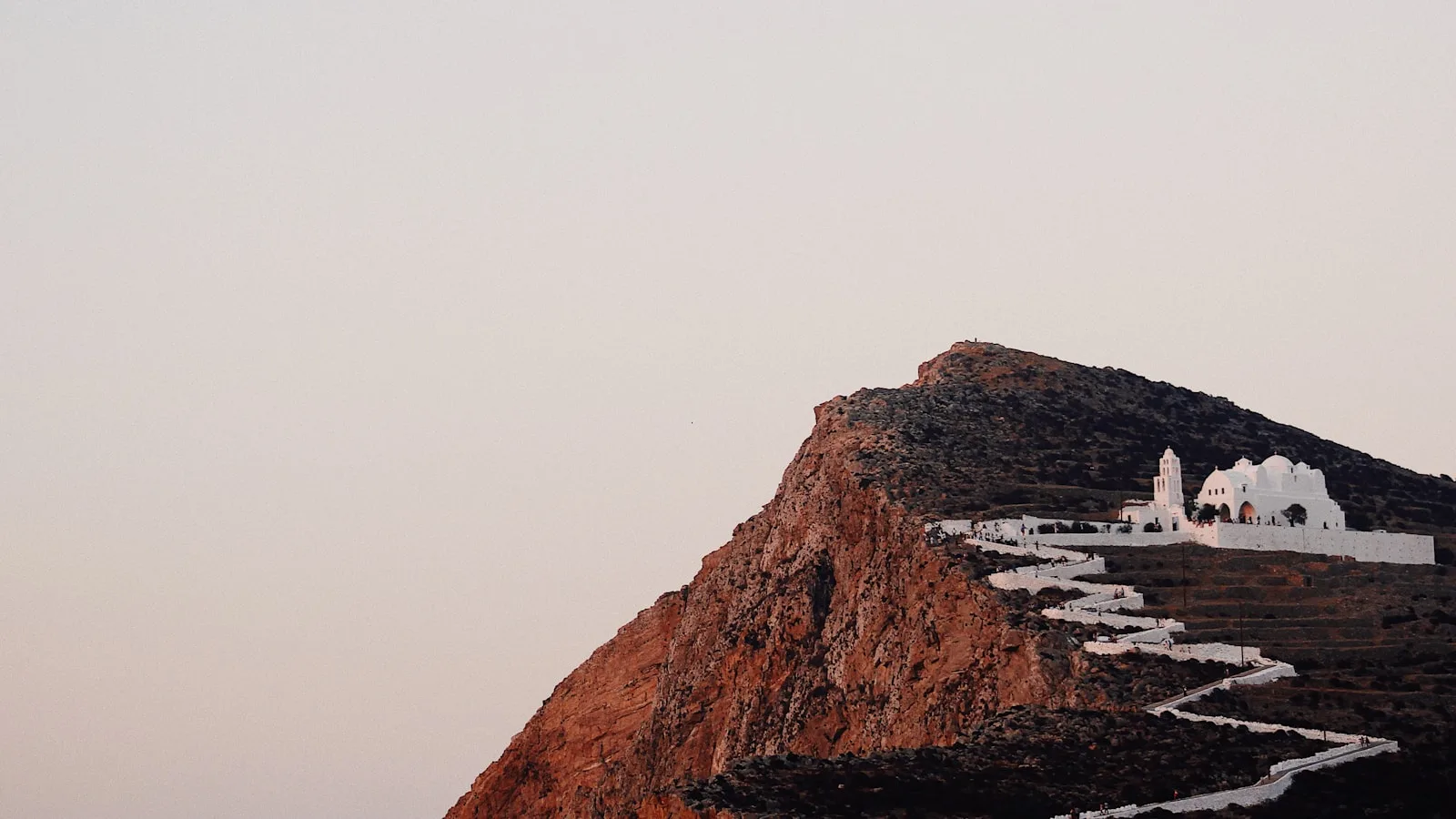
Folegandros, 75 kilometres to the northwest, has no queuing system. It has a clifftop village — the Chora — that sits on the edge of a 200-metre drop to the sea with the same bone-white Cycladic architecture, the same bougainvillea spilling over the same narrow lanes, the same Aegean light arriving at the same angle. It also has, on any given summer evening, perhaps thirty people watching the sunset. The difference between these two experiences is not subtle. It is the difference between a place and a theme park version of a place.
If You Absolutely Must Do Santorini...
The defence of Santorini is usually this: but the caldera views are unmatched. And this is true. The specific geology of a volcanic caldera is genuinely singular. If you have never seen it and you are nearby, go. But the secret to surviving Santorini in 2026 is avoiding the boutique hotels that charge €500/night for the privilege of standing on your own balcony. You want a hotel in Thira (Fira) that offers caldera views without the Oia markup.

Folegandros: The Anti-Santorini
The Chora is a labyrinth of narrow alleys connecting a series of interlocking squares where tavernas have been setting up the same chairs outside the same whitewashed walls for the better part of a century. What you notice immediately, and keep noticing, is the quiet. Not silence — there are cicadas, and the sound of the sea far below. But there is no amplified music. No tour guides with flags. The community has watched other islands transform and has decided, collectively, that it would rather not.
The Ionian Wildcards: Kefalonia & Zakynthos
If you want to entirely bypass the Cycladic crowds but still get impossible turquoise water, look west to the Ionian Sea. Kefalonia is home to Myrtos Beach — a crescent of white pebbles and electric blue water that is routinely voted one of the most beautiful beaches in the Mediterranean. It is best seen from the road above, but swimming at the base is the real reward.

Further south, Zakynthos is famous for Navagio Beach (the shipwreck), but the real hidden gem is the Marathonisi islet in the National Marine Park, where loggerhead turtles nest. A half-day boat tour gets you away from the mainland party towns and into genuinely protected waters.
The Impossible Blue of Balos (Crete)
If you are flying into Greece and want an experience that genuinely rivals the Maldives without leaving the EU, the Balos Lagoon in northwestern Crete is the answer. It is a shallow, exotic lagoon where the sand is pinkish-white and the water gradients shift from turquoise to deep sapphire within twenty metres of the shore.

The Mainland Detour: Meteora
If your flight routes you through Athens, do not just sit in the airport terminal. The Meteora monasteries — six Eastern Orthodox complexes built on top of towering, sheer sandstone pillars in central Greece — are one of the most extraordinary man-made and natural intersections in Europe. It looks like a landscape from a different planet.

Getting Around Greece (Without Losing Your Mind)
Greek island logistics are the main reason people give up and just go to Santorini. The ferries are fragmented, the local buses are cryptic, and the domestic flights fill up fast. You need a single platform that aggregates ferries, buses, and transfers, otherwise, you will spend your entire trip staring at different carrier websites.