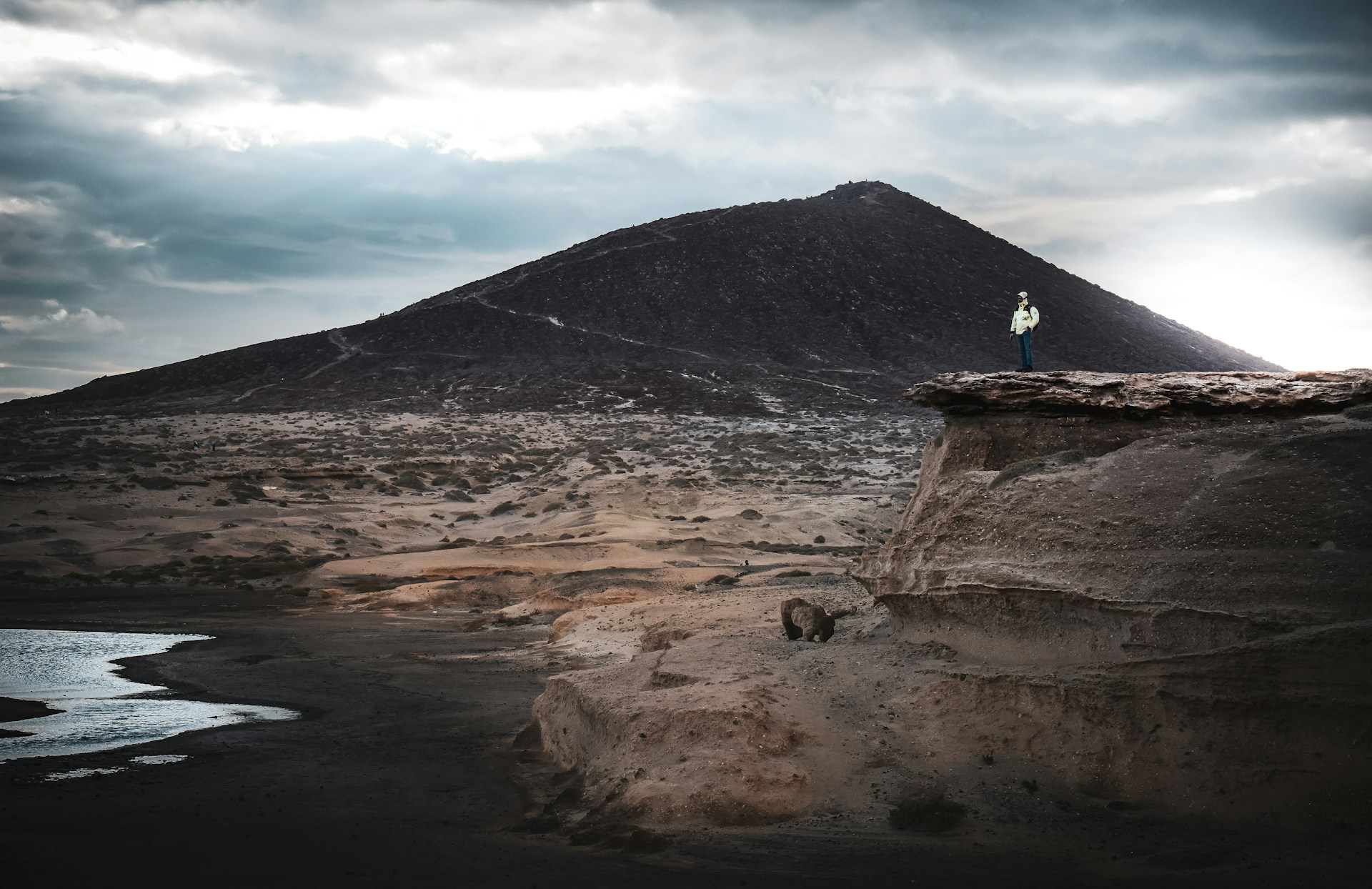
Tenerife is Europe's most visited island — 6 million tourists a year — and most of them never leave the resort corridors of Playa de las Américas or Los Cristianos in the south. That is a shame, because the actual Tenerife — the one with the towering volcano, the cloud forests, the fishing villages, the black sand beaches, and the oldest carnival in the world — is a genuinely extraordinary place. The trick is knowing where to go and what to ignore.
The island is also cheaper than most of mainland Spain once you step away from the all-inclusive hotel zone. Locals eat for €10 at lunchtime. The bus costs €1.45. Wine at a tapas bar is €1.50 a glass. On a sensible budget, €55/day is very comfortable.
Where to Stay
South, north, or somewhere in between
South Tenerife (Playa de las Américas / Los Cristianos / Costa Adeje) is where most tourists go. Reliable sun, beaches, every international chain restaurant, and all-inclusive resorts. It's fine if you want sun and a pool. It's soulless if you want to understand Tenerife. Budget accommodation: hostel dorm €30–45, basic apartment €60–90.
Puerto de la Cruz is the best base for independent travellers. Historic centre, black volcanic beaches, the extraordinary Lago Martianez lido, and easy access to Teide. More affordable than the south, far more interesting. Hostels from €22, apartments from €45.
Santa Cruz de Tenerife is the island capital — good transport links, cheaper prices, the Carnaval base, real city life. Hostels from €20, apartments from €50.
Rural villages (Masca, Garachico, El Médano) are worth a night if you want to escape the tourist circuit entirely. El Médano has the best natural beach on the island and a windsurf/kiteboard scene. Small guesthouses from €40.
Best value: An Airbnb studio apartment with a kitchen in Puerto de la Cruz runs €45–65/night and lets you cook — a significant saving over eating out three times a day in tourist zones.
Daily Costs 2026
What Tenerife actually costs
| Item | Cost (2026) |
|---|---|
| Hostel dorm bed | €20–30 |
| Budget apartment / Airbnb | €45–70 |
| Mid-range hotel | €70–120 |
| Lunch menú del día (local restaurant) | €9–12 |
| Dinner tapas bar | €15–22 |
| Local wine (glass) | €1.50–2.50 |
| TITSA bus (single journey) | €1.45 |
| Car rental (per day, advance booking) | €18–30 |
| Teide cable car | €30 |
| Budget daily total (hostel, local food, bus) | €45–55 |
| Mid-range daily total (apartment, mixed eating) | €80–110 |
Things to Do
Beyond the beach lounger
Teide National Park (free entry, cable car €30). The centrepiece of the island. The drive from the coast into the caldera passes through five climate zones — subtropical coast, pine forest, lunar rock desert. Even if the cable car is closed (frequent wind closures), the crater floor walk at 2,100m is extraordinary.
Anaga Rural Park (free). The northeast corner is covered in ancient laurisilva cloud forest — a primeval landscape of twisted trees and mist that feels like a different island entirely. Hiking trails range from 1 hour to a full day.
Masca Gorge hike. A 3-hour descent through a dramatic ravine to a black sand beach, followed by a boat back to Los Gigantes (€15). One of the best hikes in the Canaries. Book the return boat before you start — they fill up.
Lago Martianez, Puerto de la Cruz (€5). César Manrique's volcanic lido is one of the most beautifully designed swimming facilities in Europe — saltwater pools carved into black lava rock, with sculptures and planting. Worth the €5.
Garachico (free). A coastal town buried by a 1706 volcanic eruption and rebuilt over the lava — creating natural volcanic rock pools, 18th-century mansions, and a harbour. One of the most beautiful places on the island and entirely free to explore.
Whale watching (from €25). The channel between Tenerife and La Gomera has one of Europe's largest resident populations of pilot whales and bottlenose dolphins. Three-hour boat trips from Los Gigantes almost always deliver sightings.
Teide National Park: How to Do It Right
Summit permits, cable car, and the free alternatives
The cable car runs from 2,356m to 3,555m and costs €30 return. To walk to the actual summit (3,715m), you need a free permit from the Parque Nacional del Teide website — book at least two weeks in advance, more in summer. The permit is free but date-specific and non-transferable.
The cable car closes frequently — typically 30–40 days a year due to wind. Check the official Teide website the morning of your visit. If it's closed, the crater floor walk (Roques de García trail, 3.5km loop, 90 minutes) is spectacular and free.
Sunrise at Teide: some visitors drive up the night before, sleep in their car at the cable car car park (2,356m), and watch the sun rise above the cloud sea filling the valleys below. Bring a warm layer — temperatures at 2,356m hit 5–10°C even in summer.
Free alternative: Drive to the base station and walk the Roques de García loop for free. It's one of the most visually dramatic short walks in the Canaries and costs nothing beyond petrol.
Food & Drink
What and where to eat like a local
Canarian cuisine is distinct from mainland Spanish food — more African and Latin American in influence. The essentials: papas arrugadas (small wrinkled potatoes boiled in salt water, served with mojo rojo or mojo verde), gofio (roasted grain flour in stews and ice cream), fresh Atlantic fish (vieja, sama, cherne), and ropa vieja (a chickpea and meat stew, nothing like the Cuban version).
The best value eating is in guachinches — informal family restaurants operating out of homes or farm outbuildings, typically weekends only, serving home-cooked Canarian food with local wine. Lunch for two costs €15–20 total. They're concentrated in the Orotava Valley. Cash only, no English menus. Worth finding.
For the menú del día, move away from tourist zones. In Puerto de la Cruz or Santa Cruz, local workers' restaurants serve two courses plus bread and wine for €9–12 at lunch. The tourist strip in Las Américas charges €18–25 for the same format.
Local wines: Tenerife's Tacoronte-Acentejo reds from the north are excellent and cost €4–7 a bottle in local shops. At a guachinche, local wine is ~€3 a litre.
Practical Tips
Getting there, getting around, what to know
Getting there: Tenerife has two airports. South Airport (TFS) serves most budget airline routes from northern Europe — Ryanair, easyJet, Jet2, Vueling. North Airport (TFN) is mainly for domestic Spanish flights. Most tourists land at TFS.
Getting around: Rent a car. The island is compact but mountainous and buses are slow. Car rental starts at €18–30/day from local companies like Cicar or Record — 30–40% cheaper than international chains. Fuel is cheap; parking in rural areas is free.
Best time: Year-round. Spring (April–June) for hiking and fewer crowds. The February Carnaval in Santa Cruz is the island's best event — second only to Rio in scale, entirely free to attend on the streets.
Taxes: Canary Islands VAT (IGIC) is 7%, not mainland Spain's 21%. Alcohol, electronics, and tobacco are noticeably cheaper than on the peninsula.
What to skip: Loro Parque (controversial, €38), Siam Park if on a tight budget (beautiful but €40), and the kitsch dinner shows in Las Américas. The island's free natural attractions are more memorable than any paid entertainment.
Disclosure: Tour links are affiliate links. We earn a small commission at no extra cost to you.
Disclosure: These are affiliate links. We earn a small commission at no extra cost to you.
FAQ
Common questions about visiting Tenerife
Is Tenerife cheap to visit in 2026?
Moderately priced. Budget €45–55/day with hostel accommodation, local restaurants, and the TITSA bus. Mid-range travellers spend €80–110/day. The biggest savings come from staying outside Playa de las Américas and booking an apartment with a kitchen.
What is the best time to visit Tenerife?
Spring (April–June) is ideal: warm, fewer crowds, lower prices than the winter peak. The February Carnaval in Santa Cruz is the island's best event and is entirely free to attend on the streets.
Do you need a car in Tenerife?
Yes, to see the best of the island. Bus (TITSA) is cheap at €1.45/trip but slow and doesn't reach many rural sites. Car rental starts at €18–25/day from local companies Cicar or Record — book in advance and avoid airport desks.
Is Teide worth visiting?
Yes. The drive through the caldera alone is worth it. Cable car costs €30 and requires a free summit permit booked 2+ weeks ahead. The crater floor walk is free. Cable car closes ~30–40 days/year due to wind — check the day before.