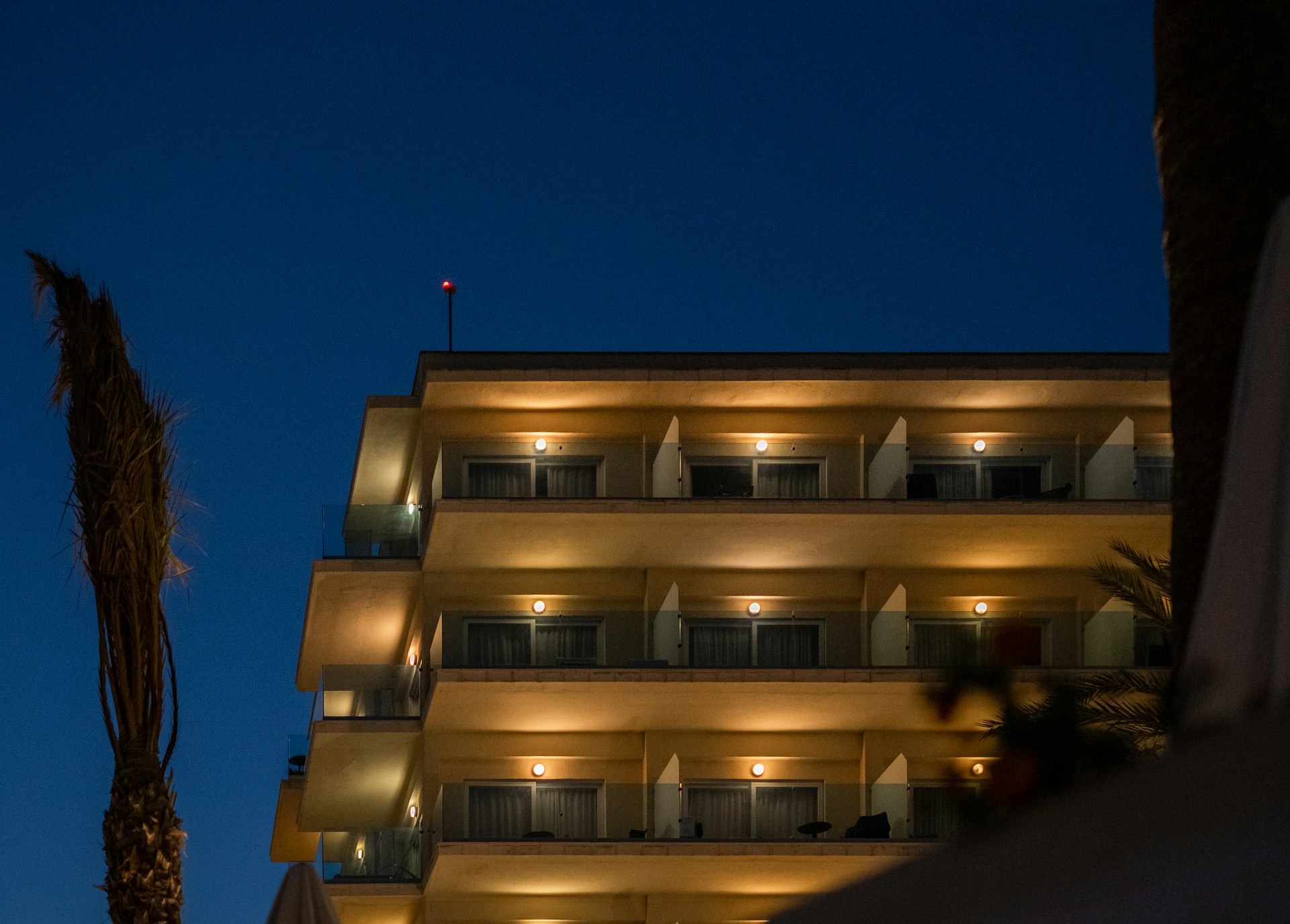
The package-holiday image of Mallorca — Magaluf, pool bars, sunburned British tourists — is only one slice of a very large island. The northwest coast (Serra de Tramuntana, a UNESCO World Heritage site) has some of the best mountain walking in the Mediterranean, the villages of Deià and Valldemossa are genuinely beautiful, and the northeast (Alcúdia, Cap de Formentor) has beaches that would be world-famous if they were anywhere else. And Palma itself is an excellent city.
Mallorca is not cheap, especially in July and August. But visit in May, June, or September–October — when prices drop and the crowds thin — and it becomes excellent value for what it offers: mountains, beaches, good food, and a high-quality city all on one island you can drive across in two hours.
Where to Stay
Palma vs. the north vs. the resort strip
Palma is the best base for independent travellers — excellent food, nightlife, and the Old Town, with the whole island accessible by car within 90 minutes. Hostels from €22, budget hotels from €55, mid-range from €80.
Port de Pollença / Alcúdia (northeast) is family-friendly, quieter than the south, with beautiful beaches and good walking access to Cap de Formentor. More expensive than Palma for hotels: budget from €70, mid-range from €110. Better for a week than for a city-centred visit.
Deià / Sóller / Valldemossa (northwest). Beautiful villages on the Tramuntana coast, very popular with artists and writers. Expensive accommodation but spectacular setting. Self-catering from €90/night, hotels from €120.
Magaluf / S'Arenal / Palma Nova (south resort strip). Cheap packages, poor quality, crowds. Only worthwhile if the specific party scene is the goal.
Car rental is essential for seeing the best of Mallorca. Budget €25–35/day for a small car in shoulder season; €45–60 in August. Book in advance. Without a car, you'll be limited to Palma and the bus routes along the main coastal road.
Daily Costs 2026
Seasonal variation is significant
| Item | Cost (shoulder season) | Cost (July–Aug) |
|---|---|---|
| Hostel dorm (Palma) | €22–30 | €35–50 |
| Budget hotel | €55–80 | €90–140 |
| Car rental (small car) | €25–35/day | €45–65/day |
| Lunch menú del día | €10–14 | €12–18 |
| Dinner (restaurant) | €18–28 | €22–35 |
| Palma Cathedral (La Seu) | €8 | |
| Caves of Drach (Coves del Drac) | €16 | |
| Budget daily total (hostel, car, meals) | €70–90 | €100–140 |
Serra de Tramuntana
UNESCO mountains, stone villages, and the best walks
The Serra de Tramuntana is a UNESCO World Heritage cultural landscape — a 90km mountain range running along the northwest coast of Mallorca, rising to 1,445m at Puig Major. The walking is outstanding: the long-distance GR 221 (Dry Stone Route, Ruta de Pedra en Sec) runs 150km from Port d'Andratx to Pollença along the mountain ridge, but individual day sections can be walked independently.
Barranc de Biniaraix (half-day, free). The most beautiful gorge walk on the island — a stone-paved mule track through a narrow gorge from Biniaraix village above Sóller. Easy to moderate, 2–3 hours. Park in Sóller and walk up (1.5km to the gorge entrance).
Puig de l'Ofre via Barranc de Biniaraix (full day, free). Continue from the gorge up to the summit of Puig de l'Ofre (1,091m) for views over the Tramuntana and the Soller valley. Strenuous; 5–6 hours return from Sóller.
Deià to Cala de Deià (1 hour walk, free). A short path from the village of Deià down to a tiny rocky cove — one of the most picturesque walks on the island. Park in Deià (€4/hour) and walk.
Valldemossa. A hilltop village famous as the winter retreat of Chopin and George Sand in 1838–39. The Real Cartuja monastery where they stayed is the main attraction (€11 entry). The village itself — pale stone buildings, bougainvillea, mountain backdrop — is visually outstanding. Extremely crowded in summer; arrive before 09:30 or after 17:00.
Best Beaches in Mallorca
Beyond the resort coast
Cap de Formentor (northeast). A narrow peninsula with dramatic cliff scenery ending at a lighthouse — one of Mallorca's most spectacular landscapes. The beach at Cala Formentor is beautiful but extremely crowded in summer (car access restricted July–August; shuttle buses from Port de Pollença run every 30 minutes, €8 return).
Cala Mesquida (northeast). A large, undeveloped beach north of Capdepera backed by sand dunes and natural scrub. Very few sun loungers; largely local beach. One of the best on the island for walking. Free car park nearby.
Es Trenc (south). The longest natural beach on Mallorca — 3km of white sand and clear shallow water, backed by salt flats and nature reserve. No large hotels. Day trippers from Palma make it busy in July–August; quiet in shoulder season. Free to access; pay car park.
Cala Figuera (southeast). A narrow calanque between high cliffs, accessible only on foot (15-minute walk from the road). No beach facilities. One of the most beautiful spots on the island in spring and autumn when the water is clearest.
Palma
The island's capital and best city
La Seu Cathedral (€8). One of the great Gothic cathedrals of Europe — the interior is extraordinary for its size (7,000 square metres) and the rose window, the largest of its kind in the world. Gaudí controversially redesigned parts of the interior in 1904–14. Best seen from across the harbour at sunset when the golden limestone glows.
Old Town / Casc Antic (free to explore). The medieval Arab Quarter (La Portella, Es Puig de Sant Pere) has excellent independent restaurants, wine bars, and boutiques. Walk the street grid around Carrer dels Apotecaris and Carrer de la Portella for the most atmospheric part.
Bellver Castle (€4, free Sunday). A circular Gothic castle on a pine-covered hill above the bay — the only circular medieval castle in Spain. Good views of Palma and the bay. Free on Sundays.
Mercado de Santa Catalina. The most local market in Palma — a covered food hall in the Santa Catalina neighbourhood with excellent tapas bars, fresh produce, and seafood. Lunch here is one of the best-value meals in the city (€12–18 for market tapas and wine).
Practical Tips
Getting there, getting around, what to book in advance
Getting there: Palma de Mallorca Airport (PMI) is one of the busiest in Spain with cheap direct flights from most European cities. Ryanair, easyJet, Vueling, and Jet2 operate extensively. Ferries from Barcelona (8 hours overnight, from €40), Valencia (8 hours, from €35), and Denia (4 hours, from €45) via Baleàlia and Trasmediterránea are a good option for those wanting to bring a car.
Getting around: Rent a car. Public buses (TIB) cover the main routes but are slow and don't reach the best beaches and hiking trailheads. Car rental from €25/day booked in advance; airport pick-up is convenient. Palma city itself is walkable.
When to book: July–August accommodation on Mallorca books out months in advance. For the Tramuntana refuges (overnight hiking huts on the GR 221), book via the Consell de Mallorca website at least 3–4 weeks ahead in May–June and September.
Disclosure: Tour links are affiliate links. We earn a small commission at no extra cost to you.
Disclosure: These are affiliate links. We earn a small commission at no extra cost to you.
FAQ
Common questions about Mallorca 2026
Is Mallorca worth visiting on a budget?
Yes — especially in May, June, September, and October. The Serra de Tramuntana hiking is free, the best beaches are free, and Palma is affordable compared to other Mediterranean island capitals. Avoid July–August when prices nearly double.
How much does Mallorca cost per day in 2026?
Budget travellers in hostels with a rental car: €70–90/day in shoulder season, €100–140 in peak summer. Without a car, budget €50–65/day but you'll be limited to Palma and bus-accessible areas.
What is the best area to stay in Mallorca?
Palma is the best base for independent travellers — walkable city, great food, central location. The northeast (Alcúdia, Port de Pollença) is better for beach holidays and families. The Tramuntana villages (Deià, Sóller) are beautiful but expensive and require a car.
When is the best time to visit Mallorca?
May, June, and September–October. Warm (24–28°C), manageable crowds, good prices. July–August is packed and expensive. April is quiet and cheap but weather is unreliable. November–March is very quiet with many businesses closed on the coast.