In This Guide
Rouen & Norman History
Where Joan of Arc met her fate and Monet painted cathedrals
Rouen is the spiritual capital of Normandy—a city where history feels alive in the half-timbered houses that lean over medieval streets, in the Gothic spire of the cathedral that Monet painted thirty times, and in the market square where Joan of Arc was burned at the stake. In September 2026, Rouen offers a perfect blend of cultural depth, gastronomic excellence, and manageable scale. It's Normandy's most underrated destination, often overshadowed by Mont Saint-Michel and the D-Day beaches, but possessing a richness that rewards the curious traveler.
The city's history is written in its architecture. Rouen was one of medieval Europe's greatest cities—a prosperous port where the Seine met the English Channel, home to a population of 100,000 when London had barely half that. The Cathedral of Notre-Dame, with its 151-meter cast-iron spire (the tallest in France), dominates the skyline and inspired Monet's obsessive series. The Gros-Horloge, a 14th-century astronomical clock, spans a Renaissance archway in the heart of the old town. Half-timbered houses from the 15th and 16th centuries line the streets—Rouen has over 2,000 of them, more than any other French city.
But Rouen isn't stuck in the past. The docks district has been transformed into a contemporary arts hub, the Musée des Beaux-Arts houses one of France's finest collections outside Paris, and the restaurant scene rivals Lyon for quality. The city sits at the center of Normandy's food universe—this is the land of Camembert, Calvados, and apples that appear in every course from starters to digestifs. The September markets overflow with produce from the surrounding orchards and dairy farms.
September is the ideal time to visit. The summer tourists have departed, the weather is mild and golden (18-22°C), and the city hosts cultural festivals that celebrate its heritage. The light has that soft autumn quality that photographers chase, and the restaurants have transitioned from summer tourism to local seasonal menus. It's the month when Rouen feels most itself—neither overwhelmed by visitors nor closed for winter.
Disclosure: Tour links are affiliate links. We earn a small commission at no extra cost to you.
Disclosure: These are affiliate links. We earn a small commission at no extra cost to you.
Disclosure: Some links are affiliate links. We earn a small commission at no extra cost to you. We only recommend services we use and trust.
Getting There & Around
Trains from Paris and navigating the medieval streets
By Train: The TGV from Paris Saint-Lazare reaches Rouen in just 1 hour 30 minutes (from €18 if booked early). The train journey follows the Seine valley through increasingly rural landscape—Normandy announces itself with orchards and half-timbered villages. Direct trains also connect to Le Havre (50 minutes), Caen (1h30), and Dieppe (45 minutes). Rouen's train station is a 10-minute walk from the cathedral and old town. It's a compact, manageable station with clear signage. September is quiet on the rails—book a week ahead for best fares.
By Car: Rouen is 130km northwest of Paris, accessible via the A13 autoroute (1h30 drive). The approach through the Seine valley is scenic, especially in September when the orchards are heavy with apples. However, driving in Rouen's old town is frustrating—narrow streets, limited parking, and confusing one-way systems. Park at one of the peripheral lots (€1.50-2/hour) and walk. A car is only necessary if you're planning day trips to the coast or rural Normandy.
Local Transport: Rouen's old town is entirely walkable—the cathedral, Joan of Arc Church, Gros-Horloge, and the main museums are all within a 15-minute stroll of each other. The Réseau Astuce bus and tram network is efficient for reaching outer areas (€1.70 per ride, €4.50 day pass). The TEOR bus lines are rapid transit with dedicated lanes. You won't need public transport for sightseeing, but it's useful for the Musée de la Céramique or the docks district.
Walking the Old Town: Rouen rewards pedestrians. The cobbled streets of the pedestrianized center reveal architectural details invisible from a car—the carvings on half-timbered houses, the hidden courtyards, the views of cathedral spires between buildings. Wear comfortable shoes; the old streets are uneven. The tourist office offers excellent walking maps highlighting the half-timbered houses and their histories.
Where to Stay
Cathedral views, old town charm, and riverside hotels

Old Town (Vieux Rouen): Staying in the heart of the medieval quarter puts you steps from the cathedral, the Gros-Horloge, and the restaurants of Rue du Gros-Horloge. Hôtel de Bourgtheroulde is the luxury choice—a historic mansion turned five-star with a spa, indoor pool, and rooms overlooking the cathedral (€200-300/night). For character at lower prices, Hôtel Morand occupies a 17th-century building with beams and period details (€90-130). Budget travelers should consider Hôtel Astrid—simple, clean, and walking distance to everything (€60-80).
Cathedral Quarter: The area around Notre-Dame offers stunning views of the Gothic facade, especially magical when illuminated at night. Hôtel Cardinal has rooms with cathedral views and a quiet courtyard (€100-140). The neighborhood is quieter than the old town center but equally convenient. You're close to the Musée des Beaux-Arts and the antiques district. This is the choice for travelers who want to fall asleep and wake up to the sight of Monet's favorite spire.
Left Bank (Rive Gauche): Across the Seine from the old town, this area has modern hotels at better prices and easy access to the docks district. The Novotel Rouen Sud offers reliable chain comfort with parking (€80-110). You're a 15-minute walk or short metro ride from the cathedral, but you get newer rooms and often better deals. The left bank has a more local feel—this is where Rouennais actually live and shop.
Budget Options: Rouen is affordable by French standards. The B&B Hôtel Rouen Centre offers modern, compact rooms near the station (€55-75). Airbnb is well-developed with private rooms from €40 and apartments from €70. September is low season for tourism—prices drop 15-20% from summer peaks, and availability is excellent. Book the luxury hotels ahead if you want specific cathedral views.
Daily Costs
Normandy value in a historic setting
Budget Explorer: €65-95/day. Stay at a budget hotel or Airbnb (€55-80/night), eat at bakeries and crêperies (€12-18/day), walk everywhere, visit free churches and half-timbered streets. Rouen's museums have reasonable entry fees (€6-8), and many churches are free. The old town's atmosphere costs nothing to enjoy. September is shoulder season—lower prices and fewer crowds than summer. Total: €455-665/week.
Mid-Range Comfort: €140-190/day. Hôtel in the old town (€90-130/night), restaurant lunch with Norman cider (€20), proper dinner featuring local specialties (€35-45), museum entries (€20 total for main museums), and miscellany. This tier lets you enjoy Rouen's gastronomy and culture fully. The value is excellent compared to Paris—expect to pay 40% less for equivalent quality. Total: €980-1,330/week.
Luxury Experience: €280-400/day. Stay at Hôtel de Bourgtheroulde (€200-280/night), private guided tour of the cathedral and old town (€150), dinner at Gill (Michelin-starred, €100-140), Calvados tasting at a historic cellar, shopping for antiques in the cathedral quarter. Rouen's luxury tier is small but high-quality—the hotel and restaurant scene punches above its weight. September brings harvest-season special menus. Total: €1,960-2,800/week.
Saving Money in Rouen: The half-timbered architecture, churches, and atmospheric streets are free. Many museums offer free entry on the first Sunday of each month. Eat lunch at the crêperies on Rue du Gros-Horloge (€10-15) rather than full restaurants. The covered market (Halles) is ideal for picnic supplies—local cheese, charcuterie, and cider. September accommodation is significantly cheaper than July-August. Walk everywhere—the old town is compact.
Top Things to Do
Cathedrals, clocks, and half-timbered streets

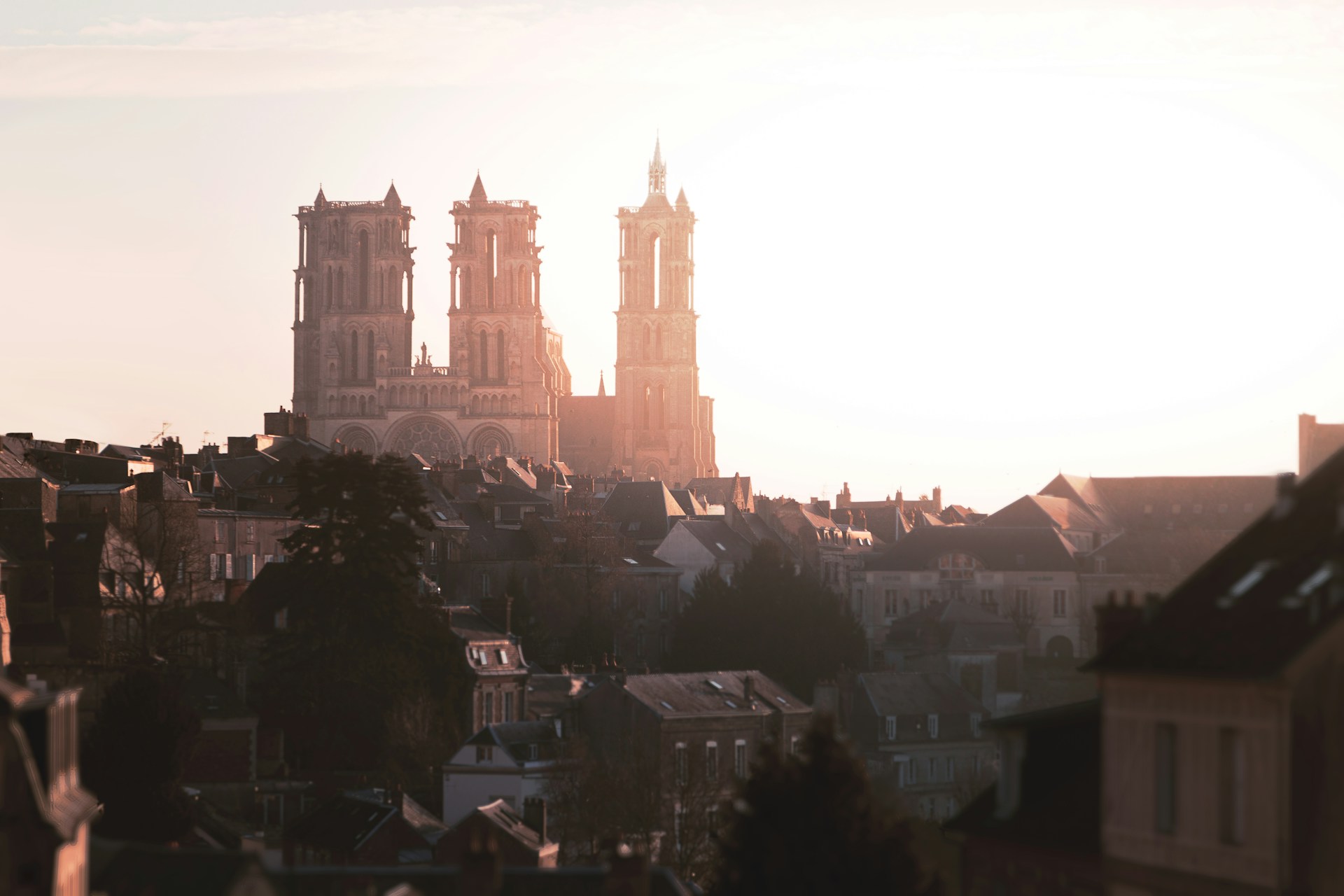
Cathedral of Notre-Dame: Monet painted this Gothic masterpiece thirty times, trying to capture how the light transformed the facade. The cathedral doesn't disappoint in person—the 151-meter iron spire (the tallest in France) pierces the sky, and the facade is a textbook of Gothic evolution from the 12th to the 16th centuries. Inside, the 14th-century stained glass of the Lady Chapel survived WWII by being removed and stored; it's among the finest medieval glass in France. The crypt contains the heart of Richard the Lionheart. Visit at different times of day—the morning light hits the portal sculptures, while sunset illuminates the stained glass from within. Free entry; €6 for the crypt.
Gros-Horloge (Great Clock): This is Rouen's symbol—a 14th-century astronomical clock that spans a Renaissance archway on the main street. The single hand shows the hour, the opening above displays the phases of the moon, and the sheep below represents the wool trade that built Rouen's wealth. The adjacent belfry (€7 entry, 100 steps) offers views over the old town's sea of slate roofs and chimneys. The clock mechanism is visible inside the belfry. It's the perfect introduction to Rouen's medieval character—imagine merchants in the 15th century checking the time here as they conducted business.
Food Scene
Normandy's gastronomic capital
Rouen sits at the center of Normandy's food universe, where apples, dairy, and seafood from the nearby coast converge in one of France's richest culinary traditions. This is the land of the "trou normand"—the tradition of a small glass of Calvados (apple brandy) between courses to "make a hole in the appetite" and enable more eating. The restaurants range from traditional establishments serving the dishes that made Rouen famous to contemporary bistros reinterpreting Norman ingredients.
Local Specialties: Canard à la Rouennaise—pressed duck with a sauce made from the duck's blood, liver, and Cognac, served tableside with a silver press. Andouillette de Troyes—a pungent sausage made with tripe, loved or hated but authentically Norman. Tripes à la mode de Caen—tripe braised with cider and vegetables for hours until meltingly tender. Camembert, Pont-l'Évêque, and Livarot—the three great Norman cheeses. Tarte Tatin—the upside-down caramelized apple tart invented at the nearby Tatin sisters' inn. And Calvados—the apple brandy that appears at every meal, from aperitif to digestif.
Where to Eat: La Couronne (founded 1345) is France's oldest inn and the place to experience canard à la Rouennaise—the duck press ceremony is theatrical and the history palpable (€80-120). Gill offers Michelin-starred modern Norman cuisine in an elegant setting on the Seine quays (€90-130). For more casual dining, Les Maraîchers serves traditional Norman dishes in a half-timbered house near the market (€30-45). The Rue du Gros-Horloge has numerous crêperies and casual restaurants for everyday dining (€15-25).
Markets & Shopping: The covered market (Halles) near the cathedral is the place to assemble a Norman picnic: cheese from the Fromagerie Lethuillier, cured meats from Charcuterie Thierry, and a bottle of cider. The market is open daily until 1pm; Saturday mornings are busiest with producers from the surrounding countryside. For a splurge, buy a bottle of vintage Calvados at a specialty shop—it's the perfect souvenir and a genuine Norman experience.
Day Trips
The Seine, Étretat, and Norman abbeys
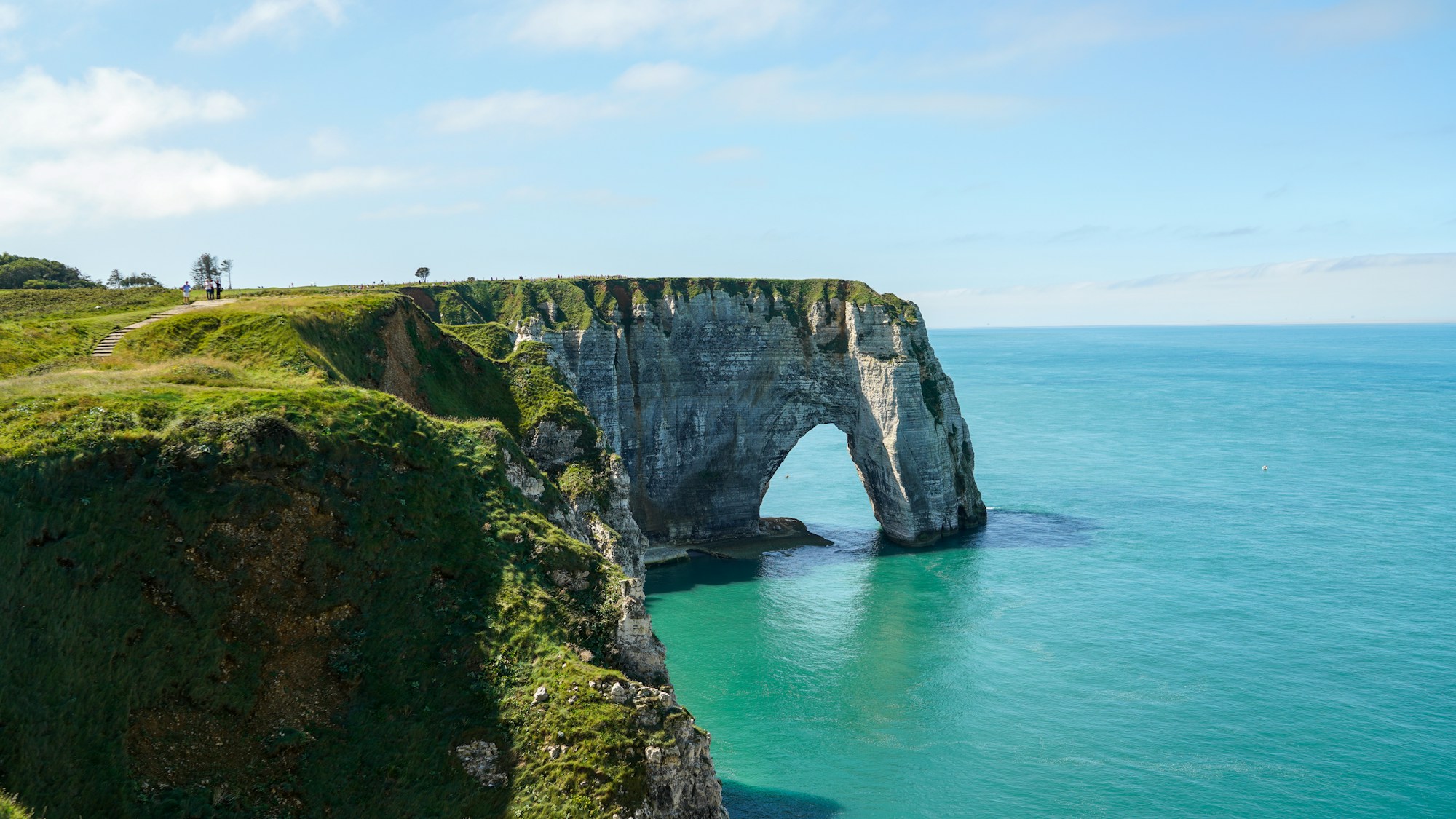
Étretat: An hour northwest, these dramatic white cliffs were immortalized by Monet and continue to inspire visitors. The Porte d'Aval arch and the Aiguille (needle) rock formation are iconic Norman scenery. Walk the cliff paths for panoramic views, explore the pebble beach, and enjoy seafood at the restaurants lining the promenade. Combine with a visit to Fécamp (home of Bénédictine liqueur) for a full day. The drive follows the winding Route des Falaises (Cliff Road) with sea views around every bend.
Jumièges Abbey: Forty minutes west along the Seine, these haunting ruins are among France's most evocative. The abbey was founded in 654 AD, destroyed by Vikings, rebuilt by William the Conqueror, and finally ruined in the French Revolution. What remains are skeletal walls and arches rising from formal gardens, their reflection perfect in the surrounding ponds. The setting—among apple orchards on a loop of the Seine—is quintessentially Norman. Allow half a day including the scenic drive along the river.
Honfleur: An hour's drive takes you to the harbor that inspired the Impressionists. The Vieux Bassin (old harbor) is lined with tall, narrow houses that seem to grow directly from the water. The Sainte-Catherine church is built entirely of wood by shipwrights. The Eugène Boudin Museum houses works by the local painter who taught Monet to appreciate light on water. Honfleur is touristy but worth it—have lunch at a harbor-side restaurant and imagine yourself in a 19th-century painting.
Practical Tips
Making the most of medieval Rouen
Cathedral Light Show: On summer evenings (June-September), the Cathedral of Notre-Dame hosts a spectacular sound and light show called "Cathédrale de Lumière." Projectors illuminate the facade with images that tell the history of Rouen, accompanied by music. The show is free and takes place after dark; arrive early for a good viewing spot in the square. It's magical and not to be missed if you're visiting during the season. Check exact dates as they vary by year.
Photography: Rouen is exceptionally photogenic, especially the half-timbered houses. Early morning (before 9am) offers the best light on the cathedral facade and the emptiest streets. Sunset illuminates the stained glass from outside, creating a glow visible through the windows. The Gros-Horloge is best photographed from the small square to its west. For classic views over the city, climb to the Panorama XXL or the top of the Gros-Horloge belfry. Bring a wide-angle lens for the narrow streets.
Joan of Arc Sites: Rouen is central to Joan of Arc's story. The Church of Saint-Joan-of-Arc sits on the Place du Vieux-Marché where she was burned in 1431; the modern church's roof resembles flames. The Historial Jeanne d'Arc is a high-tech museum in the archbishop's palace that tells her story through multimedia presentations (€11, allow 90 minutes). The tower where she was held prisoner (Tour Jeanne-d'Arc) still stands. It's a pilgrimage site for history enthusiasts.
Language & Etiquette: English is widely spoken in tourist areas, but attempting French is appreciated. Rouen is more relaxed than Paris—the pace is slower and the locals friendlier. Tipping is not obligatory (service is included), but rounding up or leaving €2-3 for good service is appreciated. Dress is casual except in fine dining establishments. The old town's cobblestones are uneven—wear comfortable walking shoes.
Frequently Asked Questions
How many days should I spend in Rouen?
+Two days is ideal for Rouen itself—enough to see the cathedral, the Gros-Horloge, the Joan of Arc sites, the museums, and enjoy several meals. With three days, you can add a day trip to Étretat, Honfleur, or the abbeys. Rouen works well as a base for exploring Normandy; it's more affordable than staying in smaller towns and has better dining options. Don't try to see everything in a single day—the city deserves unhurried exploration.
Is Rouen accessible for travelers with mobility issues?
+The old town presents challenges—cobblestones, narrow streets, and some hills. However, the main pedestrian area around the cathedral and Gros-Horloge is relatively flat. The Gros-Horloge belfry has 100 steps with no elevator. The cathedral has step-free access. Many restaurants and hotels have ground-floor options. The city center buses are accessible. If mobility is a concern, choose accommodation in the cathedral quarter rather than the steep streets of the old town, and focus on the main sights which are clustered together.
Can I visit Mont Saint-Michel as a day trip from Rouen?
+It's possible but ambitious—Mont Saint-Michel is 2h30-3 hours from Rouen by car or train. A day trip means 5-6 hours of travel, leaving limited time to explore the abbey and village. If you're determined, leave early (7am) and return late. A better approach is to combine Rouen with an overnight stay near Mont Saint-Michel, or to focus on closer destinations like Étretat and Honfleur. The Bayeux Tapestry and D-Day beaches are also too far for comfortable day trips from Rouen.
Is Rouen safe at night?
+Yes—the old town is well-lit and populated in the evenings, and violent crime is rare. The usual urban precautions apply: be aware of pickpockets in crowded areas, avoid unlit back streets late at night, and don't leave valuables visible in parked cars. The area around the train station can feel less welcoming after dark—stick to the main streets. Overall, Rouen is significantly safer than Paris and feels comfortable for evening strolls through the illuminated old town.
What's the best time to visit Rouen?
+Late spring (May-June) and early autumn (September-October) are ideal—mild weather, fewer crowds, and the light is exceptional for photography. July and August are warmest but busier with tourists. September is particularly good for the harvest atmosphere and the cathedral light show. December brings a Christmas market and festive lights. Avoid November (often gray and rainy) unless you specifically want to experience Norman winter atmosphere. The city is pleasant year-round thanks to its indoor attractions.