In This Guide
La Rochelle & Atlantic Port
Harbor defenses, ocean breezes, and Charente-Maritime charm
La Rochelle is France's most elegant Atlantic port—a city of honey-colored stone, defensive towers guarding a protected harbor, and a maritime heritage that dates back to the Huguenot traders and Atlantic explorers. In July 2026, this historic port city will be at its summer best: the harbor filled with yachts and sailing ships, the beaches drawing crowds seeking Atlantic waves, and the Vieux Port restaurants serving the freshest seafood from the morning catch. It's a city that manages to be both sophisticated and approachable, historic and alive with contemporary energy.
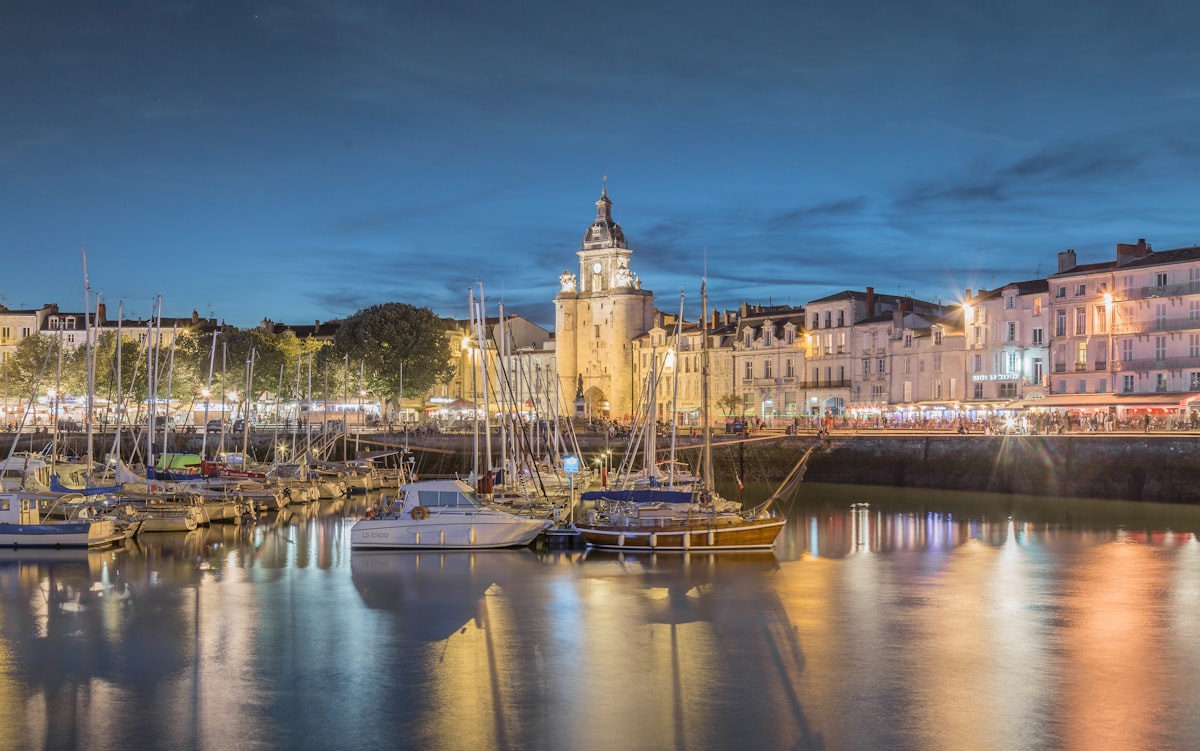
The city's defining image is the Vieux Port (Old Harbor), guarded by the medieval towers of Saint-Nicolas and the Chaîne—the massive stone fortifications that once protected La Rochelle from English siege. These towers still stand sentinel over a harbor that has evolved from merchant port to yachting capital. The marina is a forest of masts, with vessels ranging from sleek modern racing boats to historic tall ships. Walking the harbor walls at sunset, as the stone glows golden and the boats bob gently on the tide, is one of France's great urban experiences.
La Rochelle's history is written in its architecture. The city was a major Huguenot stronghold during the Wars of Religion, an Atlantic trading power that sent ships to Canada and the Caribbean, and a target of the famous 1627-1628 siege immortalized in Dumas's "The Three Musketeers." The old town (Vieux Port quarter) is a grid of arcaded streets and Renaissance facades that escaped the modernization that transformed many French ports. The 15th-century town hall, the cathedral with its eccentric pepper-pot towers, and the historic market hall all speak to centuries of prosperity and pride.
July is peak season: the water is warm enough for swimming (21-23°C), the famous Francofolies music festival fills the city with sound, and the long evenings invite outdoor dining. The nearby Île de Ré and Île d'Oléron offer beach escapes and oyster farms. The Charente-Maritime region produces some of France's finest seafood, cognac, and pineau des Charentes (a local fortified wine). Book accommodation well ahead—La Rochelle is popular, and July availability disappears quickly.
Disclosure: Tour links are affiliate links. We earn a small commission at no extra cost to you.
Disclosure: These are affiliate links. We earn a small commission at no extra cost to you.
Disclosure: Some links are affiliate links. We earn a small commission at no extra cost to you. We only recommend services we use and trust.
Getting There & Around
TGV from Paris, regional trains, and the bike-friendly coast
By Train: The TGV from Paris Montparnasse reaches La Rochelle in just under 3 hours (from €25 if booked early). The journey crosses the Loire valley and enters the gentle landscape of the Charente-Maritime. Direct trains also connect to Bordeaux (2 hours), Nantes (1h45), and Poitiers (1h20), making La Rochelle an excellent hub for exploring the Atlantic coast. The train station is a 15-minute walk from the Vieux Port or a quick bus ride. It's a manageable station—no confusing transfers or long walks to platforms.
By Air: La Rochelle-Ile de Ré Airport (LRH) is 10 minutes from the city center by taxi (€20-25) or bus (€1.50). It's served by seasonal flights from London (Ryanair and EasyJet, 1h20), Bristol, and other UK cities, plus year-round connections to Paris. July flights book up quickly—reserve 2-3 months ahead. For more flight options, Bordeaux Airport is 2 hours away by train or car. Most visitors find the train from Paris more convenient than flying to this part of the Atlantic coast.
Local Transport: La Rochelle's city center is entirely walkable—the Vieux Port, old town, and aquarium are all within a 15-minute stroll. The Yélo bike-sharing system is excellent and popular—bikes can be rented by the day (€5) or week (€15) with stations throughout the city. Buses serve the suburbs and beaches (€1.50 per ride). For exploring the surrounding islands and coastline, a car becomes useful; rental agencies are at the train station and airport.
Cycling: La Rochelle is one of France's most bike-friendly cities. Flat terrain, dedicated lanes, and the 70km Vélodyssée route that connects the city to the islands make cycling the ideal way to explore. The ride across the bridge to Île de Ré (3km) is spectacular, and the island's network of bike paths lets you explore its villages, salt marshes, and beaches without a car. E-bikes make the longer distances effortless.
Where to Stay
Harbor views, old town charm, and island escapes
Vieux Port & Old Town: Staying near the harbor puts you at the heart of La Rochelle's atmosphere—restaurants, bars, and the morning fish market steps away. The Hôtel de la Paix is a historic property with harbor views and period charm (€120-180/night in July). The Hôtel Saint-Nicolas offers modern comfort in a prime location near the towers (€100-140). For character, the Hôtel de la Monnaie occupies a 17th-century building with stone walls and beamed ceilings (€90-130). Note that harbor-side rooms can be noisy on summer evenings—request a room facing the interior courtyard if you're a light sleeper.
Le Gabut & Port des Minimes: South of the Vieux Port, this area is quieter but still walking distance to the center. The modern marina (Port des Minimes) has newer hotels at better prices and easy parking. The Mercure La Rochelle Vieux Port Sud offers contemporary rooms with balconies (€90-120). This is the choice for travelers with cars—parking is easier and cheaper than the congested old town. You're a pleasant 10-minute walk along the harbor wall to reach the restaurants and towers.
Île de Ré: For a different experience, stay on the island connected to La Rochelle by bridge. Saint-Martin-de-Ré, the island's port town, has hotels with a more relaxed pace and immediate access to beaches and bike paths. Hôtel de Toiras is a luxury boutique hotel in a historic townhouse overlooking the harbor (€200-300/night). More affordable options include the charming Hôtel Le Clos Saint-Martin (€100-140). The trade-off is a 15-minute drive or 30-minute bike ride to La Rochelle proper, but you get island atmosphere and immediate beach access.
Budget Options: La Rochelle has several hostels popular with young travelers and cyclists—the Hôtel F1 and Première Classe chains offer basic rooms from €60-80/night on the outskirts. The city center has a few budget hotels like the Hôtel les Brises near the beach (€70-90). Airbnb is well-developed; expect to pay €80-120 for apartments in the old town during July. Camping is an option—several sites on the outskirts and the islands offer pitches for €20-30/night.
Daily Costs
Atlantic coast value with Parisian sophistication
Budget Explorer: €70-95/day. Stay at a budget hotel or campsite (€60-80/night), eat at bakeries and crêperies (€12-18/day), rent a bike for transport (€5/day), swim at the free beaches, explore the old town on foot. La Rochelle's harbor and historic center are free; the main costs are accommodation and food. July is peak season but still more affordable than the Mediterranean coast. Total: €490-665/week.
Mid-Range Comfort: €160-220/day. Hôtel in the old town or near the port (€110-150/night), restaurant lunch with local wine (€20), proper seafood dinner (€40-50), bike rental (€5/day), aquarium visit (€20), boat trip, and miscellany. This tier lets you enjoy the full La Rochelle experience—good food, comfortable accommodation, paid activities—without luxury pricing. July is expensive but comparable to Nice or Cannes in shoulder season. Total: €1,120-1,540/week.
Luxury Experience: €350-500/day. Stay at Hôtel de Toiras on Île de Ré (€250-350/night), private sailing charter on the bay (€400/day), dinner at a Michelin-starred seafood restaurant (€100-140), helicopter tour over the islands (€180), spa treatments. La Rochelle's luxury tier is small but high-quality; the setting makes even simple experiences feel special. Book well ahead for July. Total: €2,450-3,500/week.
Saving Money in La Rochelle: The beaches are free (unlike the private beach clubs of the Riviera). The old town and harbor cost nothing to explore. Buy picnic supplies from the covered market—fresh seafood, local cheese, and baguettes for under €10. The aquarium (one of Europe's finest) is expensive (€20) but worth it; buy combined tickets online for discounts. Bike rental is cheaper and more enjoyable than taxis or buses. Avoid the harbor-front restaurants for dinner—walk a few streets inland for better value. July prices drop significantly if you stay on the islands rather than in the city center.
Top Things to Do
Towers, aquariums, and Atlantic beaches


Tour the Harbor Towers: The Saint-Nicolas Tower and the Chaîne Tower are the sentinels that guarded La Rochelle's harbor for centuries. You can climb both for panoramic views of the city, the harbor, and the Atlantic. The Chaîne Tower (tour de la Chaîne) houses a maritime museum tracing the port's history from the Huguenot era to modern yachting. The Saint-Nicolas Tower offers the best views—climb the spiral staircase to the top for vistas extending to Île de Ré. Combined tickets are €9.50 for both towers; allow 90 minutes total.
Aquarium de La Rochelle: One of Europe's finest aquariums, this modern complex houses over 12,000 marine animals across 3 million liters of water. Highlights include the shark tank (walk through the glass tunnel as sharks swim overhead), the jellyfish room with its hypnotic displays, and the coral reef ecosystems. It's educational without being childish—perfect for adults and families alike. Allow 2-3 hours. Entry is €20 (buy online for small discounts). July gets crowded; arrive at opening (9am) to avoid lines.
Beach Days: La Rochelle's urban beaches are convenient but the real gems are along the coast. Plage de la Concurrence is right in the city (walkable from the old town) but small and busy in July. Better options require a bike ride or short drive: Plage des Minimes (sandy, family-friendly, 2km south), or Plage de Chef de Baie (wilder, surf-friendly, 4km north). The islands offer the best beaches—Plage de la Couarde on Île de Ré has gentle waves and soft sand. All Atlantic beaches are free and public; unlike the Mediterranean, there are no private beach clubs charging for access.
Museums & Culture: The Musée des Beaux-Arts displays works by Monet, Sisley, and Picasso in a lovely 19th-century building (€7). The Musée du Nouveau Monde explores La Rochelle's role in transatlantic trade and slavery—thoughtfully curated and important for understanding the city's history. The Automaton Museum is a quirky delight—mechanical figures from the 19th and 20th centuries that perform for visitors (€9, closed Tuesdays).
Markets & Shopping: The covered market (Marché Central) near the harbor is open daily and overflows with local produce—oysters from nearby Marennes-Oléron, Charentais melons, and fresh fish from the morning catch. The market at Le Gabut (organic and local producers, Saturday mornings) draws food-conscious locals. For non-food shopping, the arcaded streets around Rue du Palais have independent boutiques selling everything from nautical gear to local art. Book lovers should browse the Librairie Le Camphrier—an excellent independent bookstore.
Food Scene
Fresh seafood and Charente-Maritime specialties
La Rochelle's cuisine is defined by the Atlantic—oysters, mussels, line-caught fish, and the shellfish that the region produces better than anywhere else in France. The famous Marennes-Oléron oysters are fattened in the island's clay basins, giving them a distinctive green hue and complex flavor. The Charente-Maritime is also pineau country—this fortified wine (similar to port) is the local aperitif, served chilled with seafood. The restaurants range from traditional brasseries serving the same dishes for decades to modern spots reinterpreting Atlantic ingredients.
Local Specialties: Huîtres Marennes-Oléron—the green-tinged oysters that are among France's finest, best eaten raw with lemon. Moules de bouchot—small, intensely flavored mussels grown on wooden poles. Chatte de mer—monkfish, often served braised or grilled. Pineau des Charentes—the local fortified wine, white or rosé, served chilled as an apéritif. Galette charentaise—a butter-rich cake with a hint of anise. And Cognac—though associated more with the town inland, it's produced throughout the region.
Where to Eat: Les Flots is the Michelin-starred destination—modern seafood cuisine in a beautiful harbor-front setting (€80-120). For traditional brasserie fare, Le Bar André has been serving oysters and fish since 1970, with a terrace overlooking the port (€30-50). Café du Port offers the classic La Rochelle experience—outdoor seating, seafood platters, and harbor views (€25-40). For something casual, the crêperies on Rue Saint-Nicolas serve excellent galettes made with buckwheat flour (€8-15).
Beach Dining: The restaurants along Plage de la Concurrence and Plage des Minimes serve fresh fish and shellfish with sea views. They're tourist-priced but convenient for a beach day. For a splurge, take the boat to Île de Ré and dine at Les Embruns in Ars-en-Ré (Michelin-starred, €70-100)—the terrace overlooks the salt marshes.
Day Trips
Island escapes, cognac, and coastal villages
Île de Ré: Connected to La Rochelle by a 3km toll bridge (€16 return in summer), this island is the perfect day trip. Cycle the flat paths through vineyards and salt marshes, visit the fortified harbor town of Saint-Martin-de-Ré, and swim at the beaches. The island's villages are postcard-perfect with white houses, hollyhocks, and church spires. Rent bikes at the bridge or in any village (€15-20/day). Allow a full day; the island deserves unhurried exploration.
Île d'Oléron: Larger and wilder than Île de Ré, Oléron offers Atlantic beaches, oyster farms, and the Phare de Chassiron lighthouse at the island's windswept tip. The Château d'Oléron hosts a daily oyster market where producers sell directly to visitors. The island is less polished than Île de Ré but more authentic; it's where La Rochelle locals go for beach days. Drive across the free bridge or take the summer bus.
Cognac & the Charente Valley: An hour inland, the town of Cognac gives its name to the world's most famous brandy. Tour the big houses (Hennessy, Rémy Martin, Martell) or smaller family producers. The Charente River is navigable by traditional flat-bottomed boats; cruises depart from Cognac and Jarnac. The valley is beautiful—rolling vineyards, Romanesque churches, and the slow pace of rural France. Combine with lunch in Angoulême, the comic-book capital of France.
Practical Tips
Making the most of your Atlantic visit
Francofolies Festival: If you're visiting in mid-July, you'll coincide with one of France's biggest music festivals. The Francofolies brings major French and international acts to stages around the city for 5 days. Accommodation books up months ahead and prices spike; book early if you want to attend. Day tickets are €45-60; the atmosphere is fantastic with free street performances and late-night concerts. If you're not attending, be aware that the city will be packed and some streets closed.
Island Bridge Toll: The bridge to Île de Ré is expensive (€8 each way in summer, €3 in winter) but the only access. Consider buying a return ticket if you're making multiple trips. The toll is free for pedestrians and cyclists—park at the La Rochelle side and cycle across for a free island day trip. The bridge to Île d'Oléron is free year-round. Both islands get extremely crowded on summer weekends; visit midweek if possible.
Swimming Safety: The Atlantic has stronger currents than the Mediterranean—pay attention to lifeguard flags. La Rochelle's beaches are generally safe and family-friendly, but the wilder beaches on Île d'Oléron can have rip currents. July water temperature is 21-23°C—pleasant for swimming but cooler than Mediterranean beaches. Bring a light jacket for evening beach walks; Atlantic breezes can be chilly even in summer.
Language & Etiquette: English is widely spoken in tourist areas, but French basics are appreciated. The pace of life is slower than Paris—embrace it. Tipping is not obligatory (service is included), but rounding up or leaving €2-3 for good service is appreciated. Dress is casual; La Rochelle is a sailing town where boat shoes and polo shirts are standard. The old town's arcaded streets provide shelter from sun and rain—explore them whatever the weather.
Frequently Asked Questions
Is La Rochelle better than Biarritz?
+They're different experiences. La Rochelle is more historic and elegant—the harbor, the arcaded streets, the maritime heritage give it a refined atmosphere. Biarritz is more surf-focused and Basque-influenced, with a younger, more casual vibe. La Rochelle is better for families and those interested in history; Biarritz is better for surfers and those wanting a more alternative beach culture. La Rochelle is also more compact and walkable, while Biarritz spreads along the coast. Both are excellent Atlantic destinations—choose based on your interests.
Do I need a car in La Rochelle?
+Not for the city itself—the center is entirely walkable and the bike-sharing system is excellent. A car becomes useful if you want to explore the islands thoroughly, visit Cognac, or tour the coastal villages beyond bike range. If you're staying on Île de Ré, a car is helpful for reaching different beaches and villages. Parking in La Rochelle is challenging and expensive; many hotels charge €15-25/night. Consider renting only for specific day trips rather than your entire stay.
Is the aquarium worth the price?
+Yes—at €20, it's one of Europe's finest aquariums and worth every cent. The scale is impressive (3 million liters of water), the exhibits are beautifully designed, and the collection is world-class. The shark tunnel alone justifies the entry fee. Allow 2-3 hours for a proper visit. If you have children, it's a must-do; if you're an adult interested in marine life, it's equally rewarding. Buy tickets online to skip the queue in July.
What's the best time to visit La Rochelle?
+Late spring (May-June) and early autumn (September) are ideal—warm weather, fewer crowds, and lower prices than peak July. July is peak season: the water is warmest, the Francofolies festival happens, and the city buzzes with energy, but it's crowded and expensive. August is similarly busy. September is particularly nice—the water is still warm, the summer crowds have left, and the light has that golden autumn quality. Avoid November-March unless you specifically want quiet and don't mind cool weather.
Is La Rochelle family-friendly?
+Extremely. The aquarium is a highlight for children, the beaches are gentle and safe, the bike paths are flat, and the old town is pedestrianized and safe for wandering. The Île de Ré is perfect for family cycling. Restaurants are welcoming to children, even upscale ones. The only challenge is July crowds—book accommodation early and consider visiting in June or September for a more relaxed experience with kids.