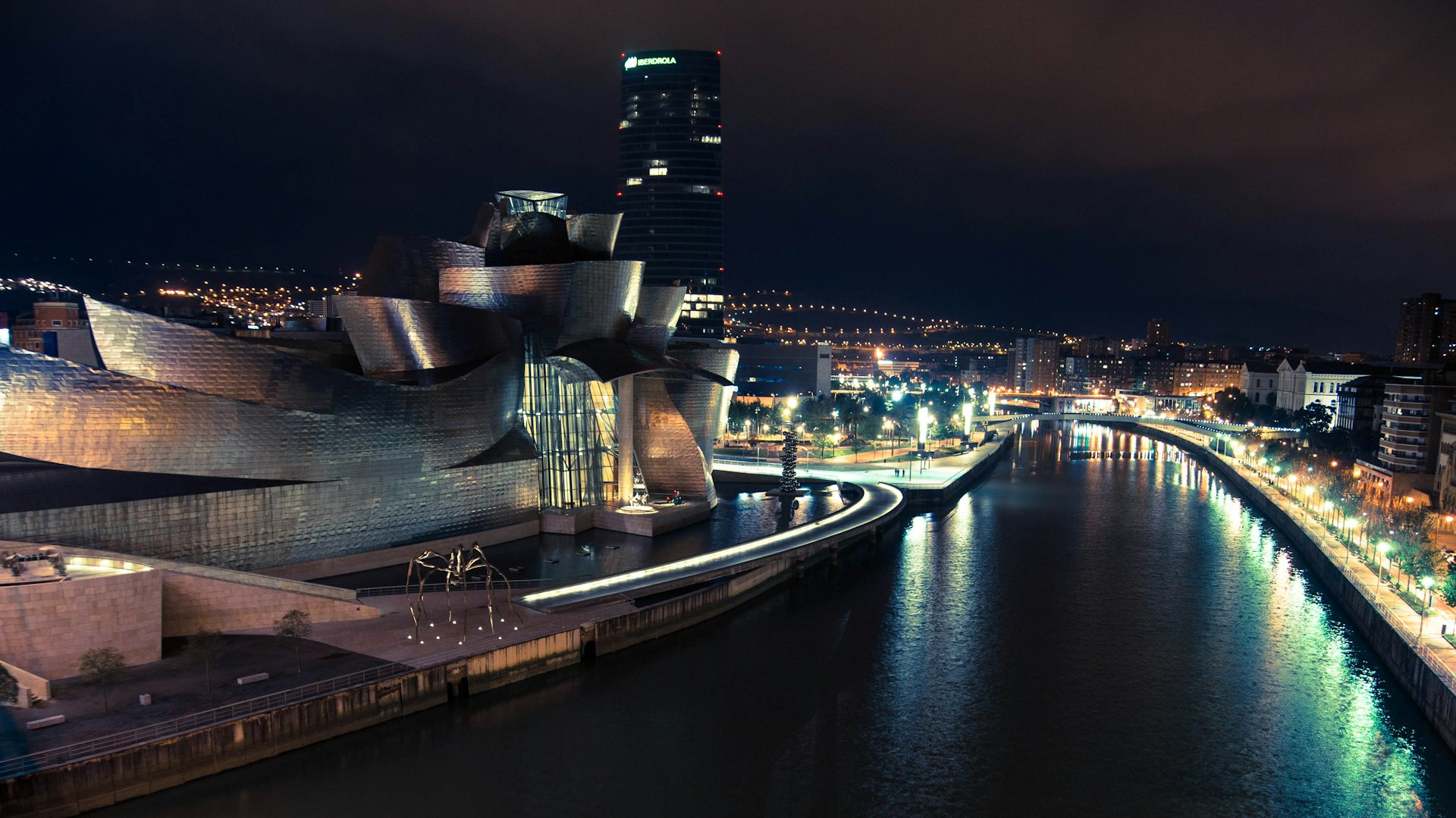
In 1997, Frank Gehry's titanium-clad Guggenheim Museum opened on the banks of the Nervión River and transformed Bilbao from a declining industrial port into one of Europe's most visited cities. The "Bilbao Effect" became a term taught in urban planning courses worldwide. The city is now clean, vibrant, and genuinely interesting — with a pintxos culture in the Casco Viejo that rivals San Sebastián and a Fine Arts Museum that deserves far more attention than it gets.
Bilbao is also a better value than San Sebastián — accommodation is cheaper, the tourist crowds are more manageable outside summer, and the day trips into the Basque coast (San Juan de Gaztelugatxe, Getaria, Bermeo) are outstanding.
Where to Stay
Casco Viejo vs. Ensanche vs. Abandoibarra
Casco Viejo (Old Town) is the most atmospheric neighbourhood — medieval street grid, pintxos bars everywhere, walkable to everything. Slightly noisier on weekends. Hostels from €20–30, budget hotels from €60, mid-range from €85.
Ensanche (new town) is the 19th-century grid neighbourhood south of the old town — more residential, quieter at night, good transport links, cheaper accommodation. A 10-minute walk from the Guggenheim. Budget hotels from €55, mid-range from €80.
Abandoibarra (Guggenheim riverside) has the most design hotels and is very walkable to the museum and the Nerua restaurant. Premium-priced: from €130+. Worth it for an architecture-focused trip.
Transport: Bilbao's metro (€1.80/ride, or day pass €4.85) is excellent and connects the airport to the centre in 30 minutes. The Bilbaobus network covers everything the metro doesn't.
Daily Costs 2026
Affordable by northern Spain standards
| Item | Cost (2026) |
|---|---|
| Hostel dorm | €20–30 |
| Budget hotel | €55–80 |
| Mid-range hotel | €85–130 |
| Guggenheim Museum entrance | €16 (€9 under-26, free Friday 18:00–20:00) |
| Fine Arts Museum | €10 (free Tuesday) |
| Single pintxo | €2–3.50 |
| Pintxos dinner (6–8 pieces + drinks) | €15–20 |
| Lunch menú del día | €12–15 |
| Budget daily total (hostel, pintxos dinner) | €55–70 |
Guggenheim Museum Bilbao
Tickets, what to see, and how long to allow
The Guggenheim Bilbao (€16 adults, €9 under-26) is the undisputed highlight of any visit. Before you even enter, stand on the Puente de la Salve bridge for 10 minutes and study the building from different angles — the titanium scales change colour with the light, shifting from silver to gold to pink depending on the sky and the time of day.
The permanent collection includes Richard Serra's The Matter of Time — eight enormous curved steel sculptures in the Arcelor Gallery that you walk through and around, experiencing the distortion of perception that comes from moving through curved space. It's one of the most powerful permanent installations in any museum in Europe. Jeff Koons' Puppy (the giant flower-covered West Highland Terrier outside) has become a Bilbao icon.
Temporary exhibitions rotate throughout the year and are generally high quality. Allow 2.5–3 hours for the full collection. Free admission on Fridays from 18:00–20:00 — these sessions fill quickly; join the queue by 17:30.
Book tickets online in advance for any visit, especially in summer. The Guggenheim Bilbao app (free) provides excellent audio guides for the permanent collection.
Things to Do in Bilbao
Beyond the Guggenheim
Bilbao Fine Arts Museum (€10, free Tuesday). One of the best art museums in Spain and perpetually under-visited because it sits in the shadow of the Guggenheim. The collection spans Flemish masters, Spanish Golden Age painting (El Greco, Velázquez, Zurbarán), Basque artists of the 19th and 20th centuries, and a strong modern art section. Free on Tuesdays.
Casco Viejo (free to explore). The medieval Seven Streets (Siete Calles) of the old town, tightly packed with pintxos bars, independent shops, and the Catedral de Santiago. Walk the area in the evening when the bars fill with locals. The Mercado de la Ribera on the river — the largest covered market in Spain — is worth a morning visit for local produce and pintxos at the market bars.
Artxanda funicular (€4.50 return). A 3-minute funicular ride to the hilltop above the city, with panoramic views across the valley and the Nervión estuary. Good sunset spot.
Azkuna Zentroa (free to enter). A former wine warehouse converted by Philippe Starck into a cultural centre with a pool, cinema, library, and restaurant. The interior columns each have a unique decorative capital — ancient, Islamic, and modern designs alternated seemingly at random. A walking tour of the space takes 30 minutes and is free.
Food Scene
Pintxos, Michelin restaurants, and the Ribera market
The Casco Viejo pintxos bars are the heart of Bilbao's food scene. The circuit is smaller and less touristic than San Sebastián's — locals dominate most bars even in high season. Classic areas: Calle Jardines, Plaza Nueva, Calle Somera. Top bars include El Globo (one of the oldest), Berton Sareko (excellent bacalao al pil-pil), and Gure Toki (creative pintxos, good wine list).
Bilbao has nine Michelin-starred restaurants. Nerua inside the Guggenheim (one star, José Miguel Olazabalaga) is the most architecturally striking — dining inside a Gehry building with views over the river. Zortziko (one star, Daniel García) is the most traditional Basque fine dining experience. Mina (one star, Álvaro Garrido) is the most inventive.
For budget eating, the Mercado de la Ribera has fresh produce stalls and small bars serving pintxos and local wine from early morning. Good for a cheap breakfast or a €12–15 lunch of market tapas.
Day Trips from Bilbao
The Basque coast and San Sebastián
San Juan de Gaztelugatxe (1.5 hours by bus/car). A tiny hermitage built on a sea stack connected to the mainland by a stone bridge and 241 steps — one of the most dramatic coastal landscapes in Spain, and recognisable as Dragonstone from Game of Thrones. Free to visit; the walk up takes 20–30 minutes. Arrive early (before 10am) to avoid the worst crowds.
San Sebastián (1 hour by bus, €8 single). The most popular day trip from Bilbao. Regular ALSA and Pesa buses run throughout the day. A full day gives you the Parte Vieja pintxos circuit and Playa de la Concha.
Getaria (1 hour by bus). A small fishing village on the Basque coast — the birthplace of Juan Sebastián Elcano, the first person to circumnavigate the globe (he completed Magellan's expedition after Magellan was killed in the Philippines). The fishing harbour, the church built over a sea rock, and the txakoli wine produced on the hillsides above make it a worthwhile half-day.
Disclosure: Tour links are affiliate links. We earn a small commission at no extra cost to you.
Disclosure: These are affiliate links. We earn a small commission at no extra cost to you.
FAQ
Common questions about Bilbao 2026
How much does it cost to visit Bilbao in 2026?
Budget travellers (hostel, pintxos dinners, one museum) spend €55–70/day. Mid-range (hotel, Guggenheim, restaurant meals) runs €90–120/day. Bilbao is more affordable than San Sebastián and comparable to the cheaper Spanish cities outside the south.
Is the Guggenheim Bilbao worth visiting?
Yes — €16 for one of the most significant buildings of the 20th century and a strong permanent collection including Richard Serra's The Matter of Time. Free on Fridays 18:00–20:00 (queue by 17:30). Allow 2.5–3 hours inside.
How many days do you need in Bilbao?
Two full days covers the city — Guggenheim and Fine Arts Museum, Casco Viejo, and the pintxos circuit. Add a third day for the Basque coast or a trip to San Sebastián.
What is Bilbao known for?
The Guggenheim Museum (1997) and the urban regeneration it triggered. Bilbao is also known for its pintxos culture, its Fine Arts Museum, and as a base for exploring the Basque coast including San Juan de Gaztelugatxe.