The Medieval Old City: One of Europe's Great UNESCO Sites
Rhodes Old Town is the most complete surviving example of a medieval fortified city in the world. Built by the Knights Hospitaller (a crusader order that ruled Rhodes 1309-1522), then occupied by the Ottomans for 400 years, the walled city contains seven kilometres of walls, twelve towers, and an extraordinary density of medieval and Ottoman architecture — all still inhabited.
The Street of the Knights (Odos Ippoton)
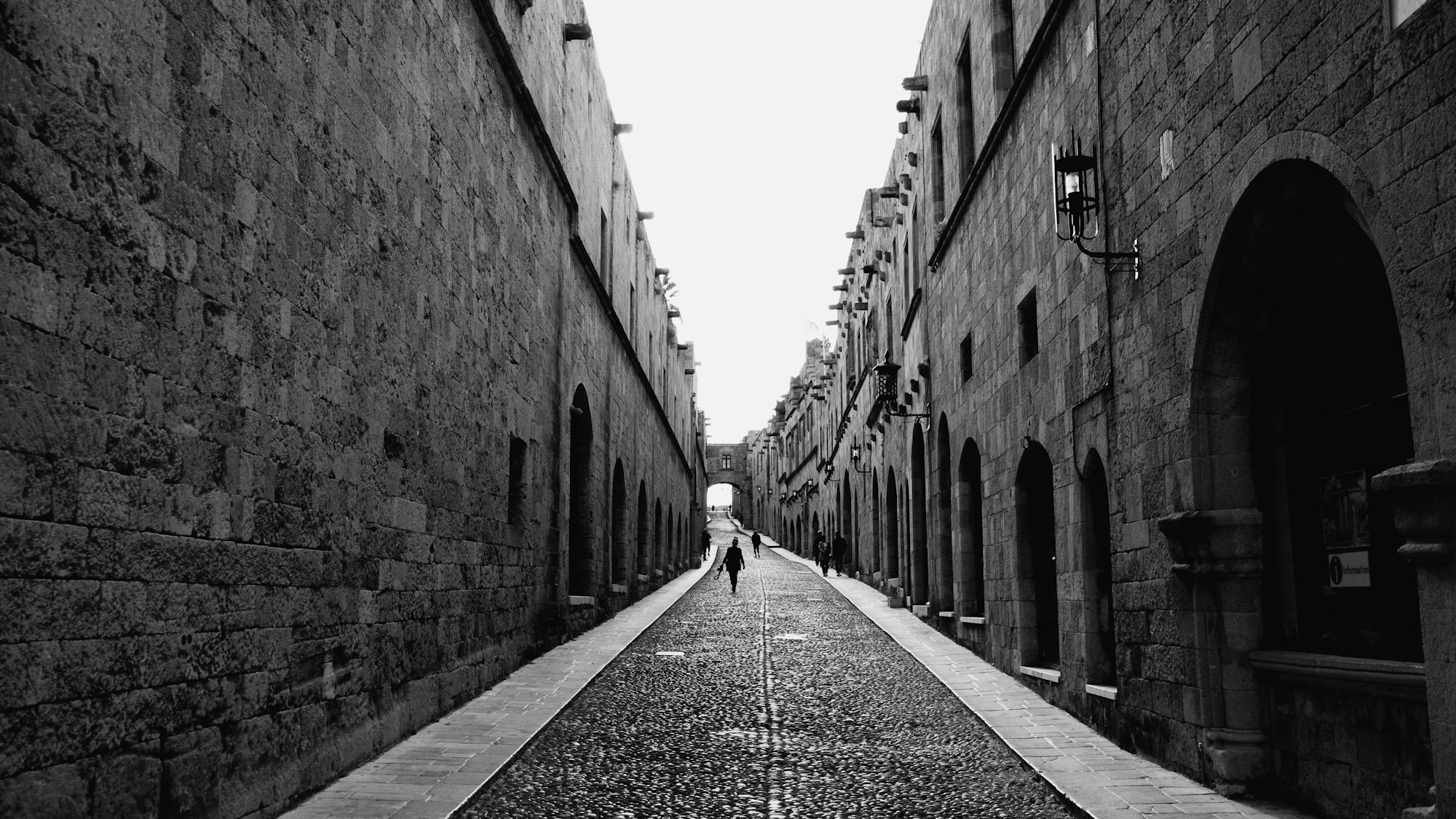
The most complete medieval street in existence — 600 metres of 15th-century knight's inns, one for each of the Order's "tongues" (national groups: France, England, Germany, etc.). Cobblestoned, flanked by Gothic stone buildings, ending at the Palace of the Grand Masters. Walk it in the morning before the cruise ships arrive. It is the best single street in Greece.
The Palace of the Grand Masters
The medieval headquarters of the Knights Hospitaller, largely reconstructed in the early 20th century as a holiday palace for Mussolini (who never used it). Impressive scale, extraordinary floor mosaics (brought from Kos), and a decent museum covering the island's history from ancient times. Tickets €8. Allow 1.5-2 hours.
The Turkish Quarter (Socrates Street & the Bazaar)
The Ottoman section of the Old Town — a warren of covered bazaars, the Suleiman Mosque (exterior viewing), the Turkish baths (still functioning), and dozens of shops selling leather goods, ceramics, and spices. Less pristine than the Knights Quarter but more alive — this is where Rhodes Old Town actually functions as a community rather than a museum.
The Old Town has two rhythms. 10am-4pm: cruise ship crowds — the main streets are difficult. Before 9am and after 6pm: the city belongs to its residents and overnight guests. Staying inside the walls means you get both versions. Day-trippers get only the crowded one.
Lindos: Village, Beach & Acropolis
Lindos is 50km south of Rhodes Town — a white-washed Dodecanese village clinging to a cliff, an acropolis crowning the cape above it, and two perfect bays framing the peninsula below. The combination of architecture, archaeology, and sea is one of the best in the Aegean.
The Acropolis of Lindos
A 4th-century BC Doric sanctuary (Temple of Athena Lindia) built atop a 116m cliff, later fortified by the Knights Hospitaller. The walk up from the village takes 20-25 minutes on a steep cobblestone path, or €6 by donkey. The views from the top — the village below, the two bays, the open sea — are extraordinary. Entrance €12. Open 8am-sunset. Go before 9am to beat the crowds and the midday heat.
Lindos Village
The village of Lindos has captain's houses built in the 17th century — elaborate whitewashed mansions with pebble mosaic courtyards (choklakia) and painted ceilings. Many are now hotels or restaurants. The village is pedestrian-only and car-free. It is tourist-heavy in summer but genuinely atmospheric — the architecture is extraordinary, and the evening, when day-trippers have left, reveals a quieter character.
Lindos Beach (Megali Paralia)
A horseshoe bay below the acropolis — fine sand, clear water, very photogenic. It gets extremely crowded by 11am in summer. Arrive early or accept sharing the beach with most of Rhodes' tourist population. The smaller St Paul's Bay (Agios Pavlos) on the south side is slightly less crowded and has a dramatic setting where Paul supposedly landed in 51 AD.
The Best Beaches in Rhodes
Tsambika Beach
Long sandy beach backed by the Tsambika monastery on a cliff. Shallow entry, clean water, good facilities. One of the best beaches on the east coast — arrived at from the main road by a 1km path. Much better than Faliraki (the resort area).
Anthony Quinn Bay
Named for the actor who fell in love with it while filming The Guns of Navarone (1960s) and bought it. Rocky coves with turquoise water, minimal development, and a protected bay that's perfect for snorkelling. 15km south of Rhodes Town.
Kalithea Springs
An early 20th-century Italian spa complex — colonnaded buildings, mosaic floors — now restored and open as a beach complex. The water is clear, the setting is extraordinary, and the historical context adds interest. €3.50 entry.
Prassonisi
The southern tip of Rhodes — a sand spit connecting a small island, with different sea conditions on each side. One side calm (south) and one rough (north, for windsurfers). Dramatic, remote feeling, very few package tourists.
Beyond the Tourist Trail
Rhodes sees 2+ million tourists annually, concentrated on the east coast resort strip and the Old Town. The west side and interior are largely ignored — which is why they're worth exploring.
Valley of the Butterflies (Petaloudes): A lush valley where thousands of tiger moths gather June-September, attracted by the resin of the Oriental sweetgum trees. A 45-minute loop walk through extraordinary scenery. Entrance €5. Go in the morning before the heat disperses the moths.
Profitis Ilias mountain: The island's second peak (798m) covered in pine forest — a significant contrast to the coastal heat. The mountain has a 1930s Italian hunting lodge (now a hotel), deer, and cool air even in August. Walk up from Eleousa village.
Medieval villages: Emponas (wine production, local tavernas), Siana (honey and souma liqueur), Kritinia (Venetian castle ruins with views) — the interior villages have been little affected by mass tourism.
Where to Stay in Rhodes
Medieval buildings converted to hotels and boutique guesthouses. The sound of cats on cobblestones at night is included. No cars inside the walls — luggage trolleys or you carry. Worth it for at least 2-3 nights.
Just outside the Old Town walls — convenient, some sea views, easier logistics. Good value compared to inside the walls.
Package holiday territory — large hotels, pool complexes, all-inclusive. Good value per room for families with children; less interesting as a base for exploring the island's depth.
Rhodes Food Guide
The food of the Dodecanese islands reflects centuries of different rulers — Byzantine, Crusader, Ottoman, Italian. Rhodes has developed a distinct cuisine that draws on all of these.
- Pitaroudia: Chickpea fritters — the local meze, flavoured with cumin and mint. €5-7 as a starter. The Rhodes version is better than anything you'll find in Athens.
- Makarounnes: Local handmade pasta, similar to Chinese hand-pulled noodles, served with browned onions and local mizithra cheese. A unique Dodecanese dish.
- Fresh fish: Rhodes is surrounded by Aegean fishing waters — the fish at a genuine harbour taverna (not a tourist restaurant) is exceptional. Order by the kilo; ask the price first.
- Souma: A local grape-distilled spirit, similar to grappa. Drink it cold at the end of a meal. Available at village tavernas in the interior.
- Wines: Rhodes has its own wine production (CAIR cooperative and boutique wineries) — the local white Athiri variety is light and mineral. Ask for the local wine.
Getting There & Around
Flights: Rhodes International Airport (RHO) — one of Greece's busiest airports in summer. Direct flights from Athens (45 min), plus extensive European charter and scheduled connections. Good value last-minute flights September-October.
Ferry: Connections from Athens Piraeus (15-18 hours overnight), Crete (2.5-3 hours from Heraklion by high-speed), and other Dodecanese islands. Rhodes is the hub of the Dodecanese ferry network.
Getting around: Buses (KTEL) cover the east coast resorts and main villages reliably. For Lindos and independent exploration, rent a car (€35-55/day) or scooter (€20-30/day). Taxis from Rhodes Town to Lindos: €45-55.
Rhodes Real Costs: 2026
| Item | Budget | Mid-Range | Splurge |
|---|---|---|---|
| Accommodation (nightly) | €45-80 (New Town) | €90-180 (Old Town) | €200-400 (boutique Old Town) |
| Dinner per person (taverna) | €15-22 | €22-35 | €40-70 |
| Lindos Acropolis entry | €12 — the same for everyone | ||
| Palace of Grand Masters | €8 — the same for everyone | ||
| Car rental (daily) | €35 | €45-55 | €65-80 (convertible) |
| Coffee in Old Town | €3-4 | €4-6 | €6-10 (view café) |
| Ferry to Marmaris Turkey (day trip) | €35-45 return — available from both operators | ||
Rhodes is significantly cheaper than Santorini and Mykonos; comparable to Crete. Field prices verified June 2026.